
Marketing technology (MarTech) has become an indispensable powerhouse, consistently demonstrating its ability to significantly increase revenue and engagement across diverse industries. However, with an ever-expanding landscape boasting over 2,000 vendors—each offering unique features, benefits, and user experiences—the selection process can feel overwhelming.
As customer experience and cross-channel marketing grow in importance, investment in sophisticated MarTech solutions is soaring. Before you commit your resources, it’s crucial to thoroughly evaluate shortlisted technologies to ensure they align perfectly with your strategic goals and deliver the functionality needed to boost your bottom line. Here are eight critical aspects to scrutinize before making your investment.
1. Mobile Device Compatibility
In today’s mobile-first world, building intimate relationships with your customers hinges on a robust mobile marketing strategy. Google underscored this importance with Mobilegeddon, a clear signal that mobile responsiveness is non-negotiable. With over a billion smartphones in circulation, a staggering 50.3% of e-commerce traffic now originates from these devices. Failing to cater to this mobile audience means losing a vast amount of potential interest and revenue.
Despite these statistics, under five per cent of marketers currently believe their platforms are truly ready for comprehensive cross-channel marketing. Beyond responsive design, consider text message marketing—a highly effective channel for immediate customer attention. Text messages boast an impressive average open rate of 98% within three minutes of delivery, and 64% of shoppers express a desire for their favorite brands to send them text updates. Ensure your chosen MarTech platform is fully equipped to leverage these powerful mobile capabilities.
2. Relationship Automation
Customer loyalty is a precious commodity, yet research reveals that 78% of consumers are not loyal to any particular brand. This often stems from a lack of genuine connection; customers don’t feel valued or cared for, diminishing their incentive for loyalty. However, this presents a massive untapped opportunity: 85% of consumers would increase their brand loyalty if they felt a brand genuinely cared for them.
Maintaining personalized relationships with a large customer base manually is simply not scalable. This is where relationship automation in your marketing technology becomes essential. Consider an example like automated inventory updates: if a shopper attempts to purchase an out-of-stock item, the system can automatically send them a text or email notification the moment the product is back in stock. This type of triggered, timely communication nurtures customer relationships over time, leading to increased engagement and, as illustrated below, higher customer spend.
The economics of loyalty: how customer spend increases with loyalty in supermarkets (SLI report)
The data clearly shows that the longer a customer maintains a relationship with a retailer, the more they are inclined to spend.
3. Platform Integration
For marketing teams often operating with limited resources and facing tight deadlines, time wasted on administrative tasks due to disjointed systems is unacceptable. Your marketing technology should offer a truly seamless experience, connecting all aspects of your strategy:
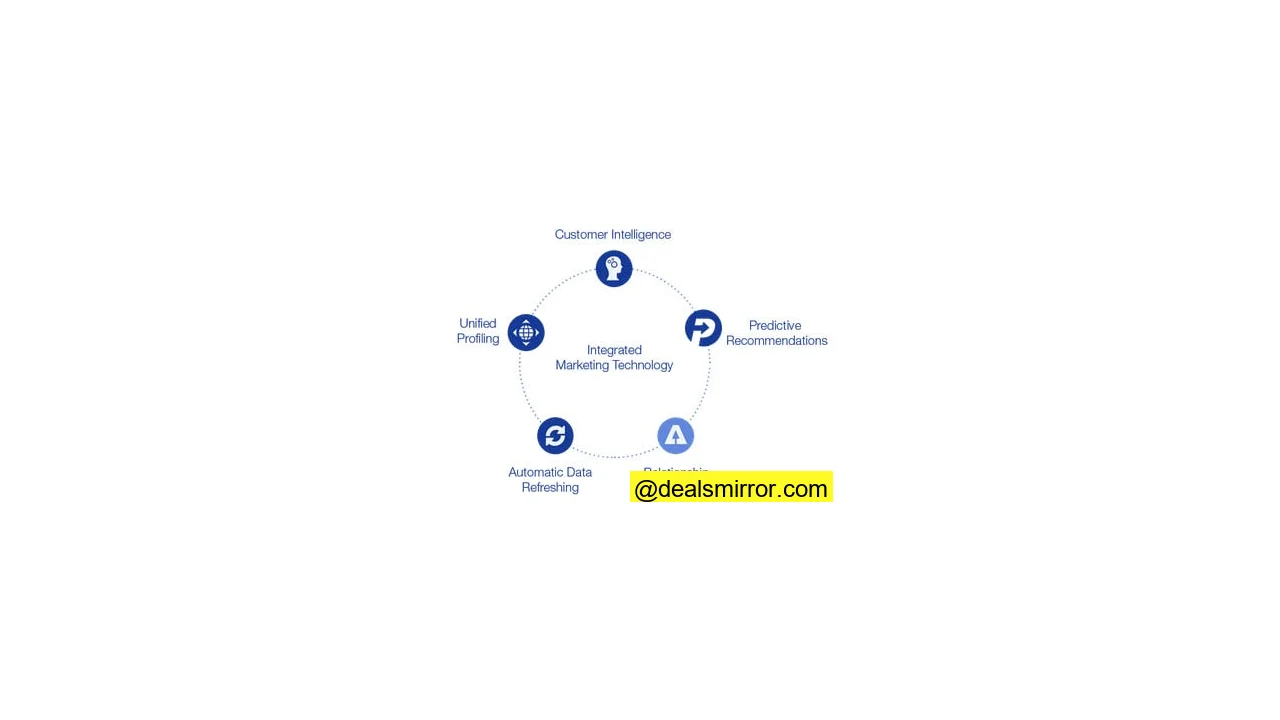
Integrated platforms: How Marketing Technology should work together
Observe how an effectively integrated platform ensures that each marketing component not only connects but also relies on the others to function optimally. This interconnectedness saves invaluable time. Imagine a marketing team forced to download and upload .csv files every time data changes (which is constantly!), or manually track customer behavior across various devices. Such manual processes inevitably lead to inaccurate, impersonal marketing, and critically, prevent your team from keeping pace with effective campaign management. Seamless platform integration is undoubtedly a worthwhile consideration before you sign any contract, ensuring efficiency and accuracy across your operations.
4. Predictive Product Recommendations
Even with an extensive product catalog, no single item will appeal to every individual customer. Brands face the challenge of making it effortlessly simple for each customer to discover products tailored to their unique preferences across all marketing touchpoints. This level of personalization is incredibly difficult to achieve manually given the vast diversity of customer tastes.
This is where predictive product recommendation engines excel. They automatically attract, engage, and retain customers by serving up highly relevant product suggestions across every marketing channel. When customers feel understood and catered to, they not only purchase more but also naturally develop greater brand loyalty. A significant 53% of consumers are willing to make higher-value transactions with retailers that leverage past browsing or purchasing behaviors for product recommendations. For instance, our client Square Meal saw a fourfold increase in purchases from email campaigns simply by implementing predictive product recommendations.
Did you know that nearly two decades ago, Amazon recognized that a remarkable 35% of their revenue stemmed directly from predictive product recommendations? This insight explains why recommendations still comprise approximately 70% of Amazon’s homepage today.
5. Strategic Support
Effective multichannel campaign management demands significant time and resources. However, when utilized to its full potential, marketing technology can dramatically boost your revenue by 75% or more. To achieve these impressive results, it’s absolutely essential to master the effective use of your marketing technology. Any reputable supplier should offer robust services designed to support you in this learning curve.
Some suppliers go above and beyond, offering to create your campaigns from scratch for a small additional fee. By leveraging the strategic support and creative expertise of your provider, you can maximize profit and deepen brand engagement with your customers while minimizing your internal resource allocation. This type of hands-on assistance is a real bonus, especially during the busiest periods of the year, such as the holiday season or Black Friday.
6. Unified Customer Profiling
Today’s highest-spending customers interact with brands across multiple devices. Therefore, it’s critical to recognize them as the same individual, whether they’re engaging on a mobile phone, tablet, or desktop computer. Customers universally expect and deserve to be treated as unique individuals. To provide this personalized experience, you need deep insights into what they’re looking for, and precisely when and how they are searching—a level of intelligence that is nearly impossible to gather without specialized tools.
Your marketing technology must include sophisticated behavior listening tools that capture shopping patterns across the web. It should seamlessly integrate your e-commerce site with your marketing platform. When combined with comprehensive customer intelligence and predictive recommendations, this powerful combination empowers you to target customers on a true one-to-one basis, driven by their individual browsing and purchasing histories.
7. Social Engagement
Manually managing social engagement is incredibly time-consuming and prone to human error. This often leads to such inaccuracies or a lack of resources that many marketers forgo proactive social engagement altogether, missing out on vital opportunities.
However, effective social engagement demonstrably increases customer retention across the entire customer journey. For instance, if a contact abandons an online shopping cart because they were interrupted by a phone call or had to rush to a meeting, automated social reminders can bring them back to the items they intended to buy. Even better, if your platform is integrated with customer intelligence, you can go beyond simple reminders, targeting these same customers with personalized suggestions of items you know they’ll love, based on their recent purchasing and browsing patterns.
This intelligent, automated social engagement helps you significantly increase revenue and reignite interest in your brand, effectively recovering sales that would have otherwise been lost.
8. Quick and Easy UX
Last but certainly not least, the user experience (UX) of your marketing platform for your internal team is just as crucial as the UX you provide to your customers. Your team shouldn’t require IT assistance every time they need to launch a campaign or evaluate marketing performance. The platform should be intuitively designed and exceptionally easy to use. Before making a significant investment, always insist on a demo or trial period; the ease of use will become apparent very quickly.
Ultimately, marketing technology exists to simplify your operations, empower your team, and help you dramatically increase revenue and engagement, all without adding stress to your deadlines. MarTech solutions are a significant investment, so proactively addressing potential challenges and thoroughly understanding the optimal opportunities for your specific needs will be absolutely essential for your future success.