

The challenges of an overloaded technology ecosystem are widely felt across businesses today. Many marketing organizations routinely utilize 6-10 different tools daily, leading to a myriad of complexities. However, email marketers are increasingly adopting a more holistic perspective, prompting a shift in focus from “Which ESP do I need?” to “How does email integrate into my overarching marketing strategy?” and “How can I consolidate all my marketing technology for enhanced efficiency and scale?”
Evolving Your MarTech Stack Selection Process
Marketing teams are fundamentally transforming their approach to technology adoption, moving away from reactive decisions toward strategic implementation:
* Instead of selecting tech vendors based on competitor choices, marketers are now prioritizing solutions that precisely meet their unique needs.
* Rather than deploying multiple point solutions for individual customer touchpoints or channels, there’s a growing trend towards adopting holistic platforms and embracing channel-agnostic strategies.
* The previous approach of choosing tech based on desired tactics is evolving; marketing teams are now first outlining their objectives and then identifying the tools that can effectively act as catalysts to achieve those goals.
With the recognition of email as the digital ID, consolidating your technology stack offers significant advantages. This consolidation enables the creation of a single source of truth—a centralized data repository that empowers the development and execution of more comprehensive and personalized marketing campaigns.
The Hidden Risks of MarTech Stack Turmoil
An unmanaged or bloated MarTech stack can introduce several critical issues:
* **Increased Inefficiencies:** Disparate systems often lead to fragmented workflows and wasted time.
* **Higher Costs:** Additional license fees and maintenance expenses accumulate rapidly across numerous tools.
* **MarTech Bottlenecks:** A complex stack can hinder your ability to launch desired campaigns or extract necessary insights.
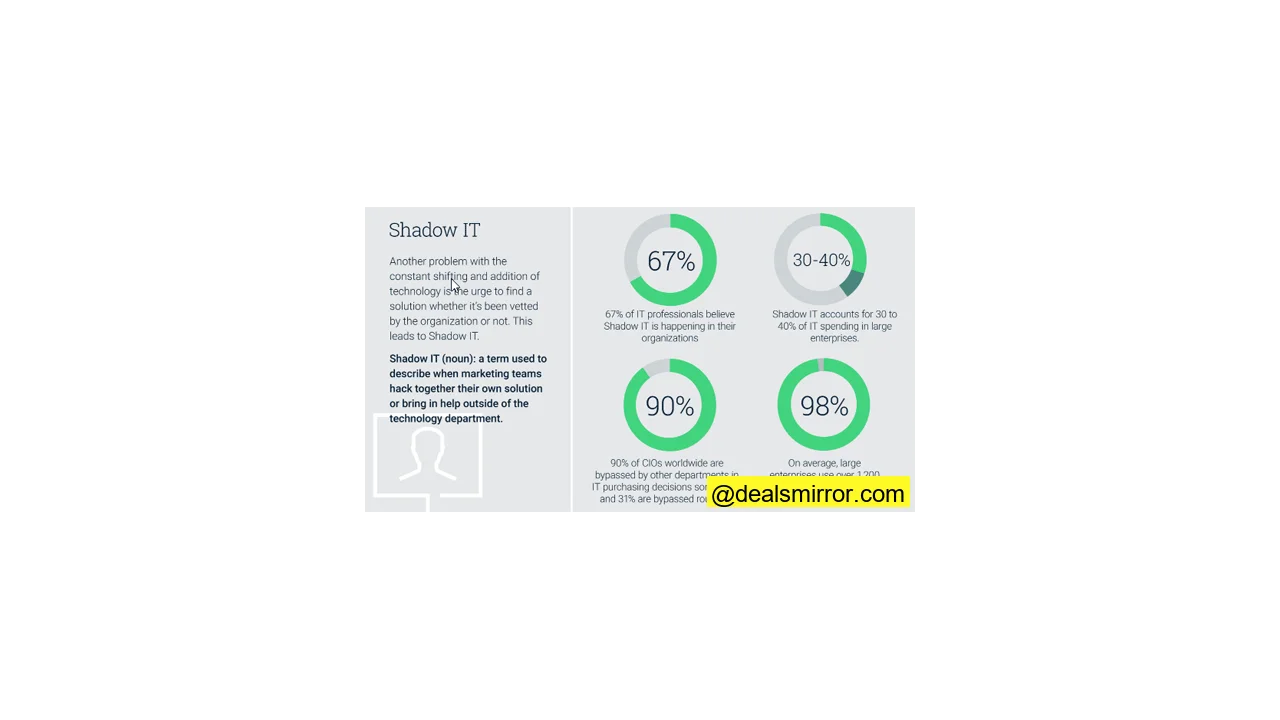
* **Serious Security Vulnerabilities:** It’s often overlooked that even a simple app download can elevate risk. Inflated MarTech stacks and Shadow IT environments pose significant security risks, increasing exposure to cyber attacks and data breaches.
A 3-Step Process for MarTech Stack Consolidation
Beyond understanding the risks and necessity of consolidation, here is a practical 3-step process to select and build a consolidated MarTech environment.
Step 1: Forge a Strategic Partnership with Your IT Team
A crucial first step in consolidating your existing technology is to establish a strong internal alliance with your IT department. This partnership with internal technology experts is indispensable.
Marketers must acknowledge the ease and temptation of introducing new technologies without formal processes. However, this often leads to a cycle of more purchasing and system breakdowns rather than genuine improvement. Most marketing teams are not technology implementation specialists or integration managers; they lack expertise in vetting vendors or selecting from a multitude of potential solutions.
**Your IT team should spearhead the new-tech selection process.** They can provide invaluable technical insights into how a new solution will integrate with existing systems, assess its security, and determine its potential to enhance marketing team efficiency. Leveraging IT professionals as allies in any digital transformation or implementation is paramount.
This vital, often-overlooked first step sets the foundation. Next, focus on clearly defining your objectives and how email can serve as the core.
Step 2: Prioritize Objectives Before Technology
Marketing technology stands as both the greatest enabler and the biggest distraction in modern marketing. Managing MarTech remains a significant challenge, with maximizing marketing effectiveness as the ultimate, often elusive, goal.
The key to success lies in tech consolidation and, critically, in starting with objectives, not the technology itself. This counterintuitive approach is essential because most software companies encourage you to begin with their technology as the first step in your strategy. This emphasis on features and functionality is pervasive in MarTech demos, websites, and marketing materials.
During a technology evaluation, a salesperson might ask, “What are you looking for in a new vendor, and how do you hope our tech will help you achieve that?” Common responses range from general desires like “better email engagement” to specific requests like “an abandoned cart workflow to increase purchases.”
This represents a primary source of confusion. “Better email engagement” is a strategy, and “an abandoned cart program” is a tactic. Neither constitutes a core objective, which might be broader goals like customer retention or business growth.
To regain strategic focus and foster creativity amidst overwhelming digital distractions, we must challenge this conventional, flawed thinking.
**The Flawed MarTech Process Often Accepted:**
1. **Technology:** What capabilities does the tech offer?
2. **Tactics:** What innovative actions can be performed with this tech?
3. **Strategy:** How can this tech align with our broader strategy?
4. **Goals:** Can this technology help us achieve our goals?
This sequence is reversed and deviates from fundamental Marketing 101 principles, which have often been forgotten amidst the distractions of digital tools.
**The Strategic MarTech Process You Should Adopt:**
1. **Goals:** What precisely do we need to achieve?
2. **Strategy:** How will we reach these goals?
3. **Tactics:** What specific actions or activities will contribute to our strategy?
4. **Technology:** What software solutions can help us effectively execute these tactics and achieve our goals?
This revised thinking liberates you. Instead of being constrained by a software’s limitations, you are empowered to find technology that genuinely facilitates your defined objectives. Once the right solution is identified, it should then guide you with proven strategies and tactics for achieving your goals.
Step 3: Select a Unified Partner Aligned with Your Strategy
Choosing the appropriate partner, in collaboration with your IT team, is the final step once your strategy and objectives are clearly defined. This crucial phase of tech consolidation involves evaluating your current tools, making informed decisions about what to discontinue, and ultimately selecting the right partner(s) to help achieve your goals.
This is where thorough research pays off. A primary consideration should be a system that positions email at its core while flexibly supporting multiple other essential channels.
**Above all, seek out a unified marketing platform that offers the following key qualities:**
* **Centralized “Source of Truth”:** Consolidate and unify customer data that was previously fragmented across various systems.
* **Single Customer View:** Provides a comprehensive, unified perspective of each customer, enabling effective segmentation and personalized communications.
* **Omnichannel Experience & Analytics:** Facilitates the creation of seamless omnichannel experiences and allows for robust analysis and insights into marketing performance.
* **”Home Grown” Development:** Ideally, the platform should be developed by the vendor itself. “Acquired clouds” can introduce integration complexities similar to a disparate home-grown tech stack, whereas an all-in-one, organically developed system offers greater flexibility and secure integrations.
**Integrate Automation and Analytics Across All Channels**
Ensure your chosen tech stack fully supports your automation and analytics needs across every channel you operate within. Omni-channel campaigns are indispensable in today’s digital landscape. While email is fundamental, assess how the system seamlessly incorporates mobile (SMS and in-app messaging), website interactions (personalized content widgets, overlays), and social media (retargeting), tying all these touchpoints back to email. Verify that every necessary channel can “communicate” effectively with one another, ensuring a cohesive and connected customer experience.
Conclusion: The Imperative of Consolidating Your Marketing Technology
The consolidation of marketing technology offers profound benefits across the board. Internally, it drives gains in efficiency, productivity, production quality, and time management. Externally, it positively impacts key performance indicators such as customer retention, personalization effectiveness, average order value, and overall revenue.
The ultimate aim of unifying your disparate technology is to centralize everything around email, thereby eliminating unnecessary redundancies, inefficiencies, and fragmented systems. Embracing tech stack consolidation is one of the most impactful strategic initiatives you can undertake now and in the years to come.