In today’s dynamic business landscape, fostering robust customer relationships is paramount to sustainable success. However, navigating the myriad marketing channels and complex sales processes can make customer relationship management a daunting task. If your business isn’t leveraging the power of Customer Relationship Management (CRM) and marketing automation tools, you could be missing out on significant opportunities and revenue.
This comprehensive guide delves into the crucial distinctions, benefits, and applications of both CRM and marketing automation to help you optimize your customer engagement strategies.
What you’ll discover in this guide:
- The fundamental differences between CRM and marketing automation
- 4 compelling reasons why your business needs marketing automation
- 3 essential reasons why customer relationship management is vital
- 7 frequently asked questions about CRM and marketing automation
Let’s unlock the full potential of your customer interactions!
Featured CRM sponsors for your business
monday.com
A versatile Work OS with a lightweight CRM built-in. Manage everything from sales and marketing to IT and software development with ease.
Pipedrive
An intuitive sales CRM designed for effortless setup and use. Features powerful sales automation, task management, lead qualification, and tracking capabilities.
EngageBay
An all-in-one CRM platform offering comprehensive marketing, sales, and service tools, including automation, at competitive prices. Free for up to 15 users.
BenchmarkONE
A convenient all-in-one sales CRM and marketing software that delivers impressive value, including a generous ‘free forever’ plan supporting up to 250 contacts.
Salesforce
The leading sales CRM platform catering to businesses from small startups to large enterprises, complete with robust pipelines and automation. A 30-day free trial is available.
Understanding CRM vs. Marketing Automation
To effectively manage and grow customer relationships, it’s essential to understand the distinct roles of marketing automation and CRM systems. While often confused, these powerful tools serve different yet complementary functions within your business strategy.
What is Marketing Automation?
Marketing automation refers to software designed to streamline and automate repetitive marketing tasks. Its primary purpose is to measure, manage, and significantly enhance your overall conversion rates. In today’s complex business ecosystem, manually executing all marketing tasks is increasingly difficult, if not impossible.
This technology handles campaigns and routine operations such as scheduling and sending email marketing, updating social media, and extensive list management—all on autopilot. While automated, modern marketing automation platforms still allow for high levels of personalization, ensuring your messages resonate with individual prospects.
Marketing automation is particularly effective for:
- Lead nurturing, guiding prospects through their journey.
- Automating email autoresponders based on user actions.
- Qualifying leads to identify those ready for sales engagement.
A key differentiator is its ability to track engaged leads’ behavior and monitor their data, enabling the automation of personalized lead nurturing campaigns.
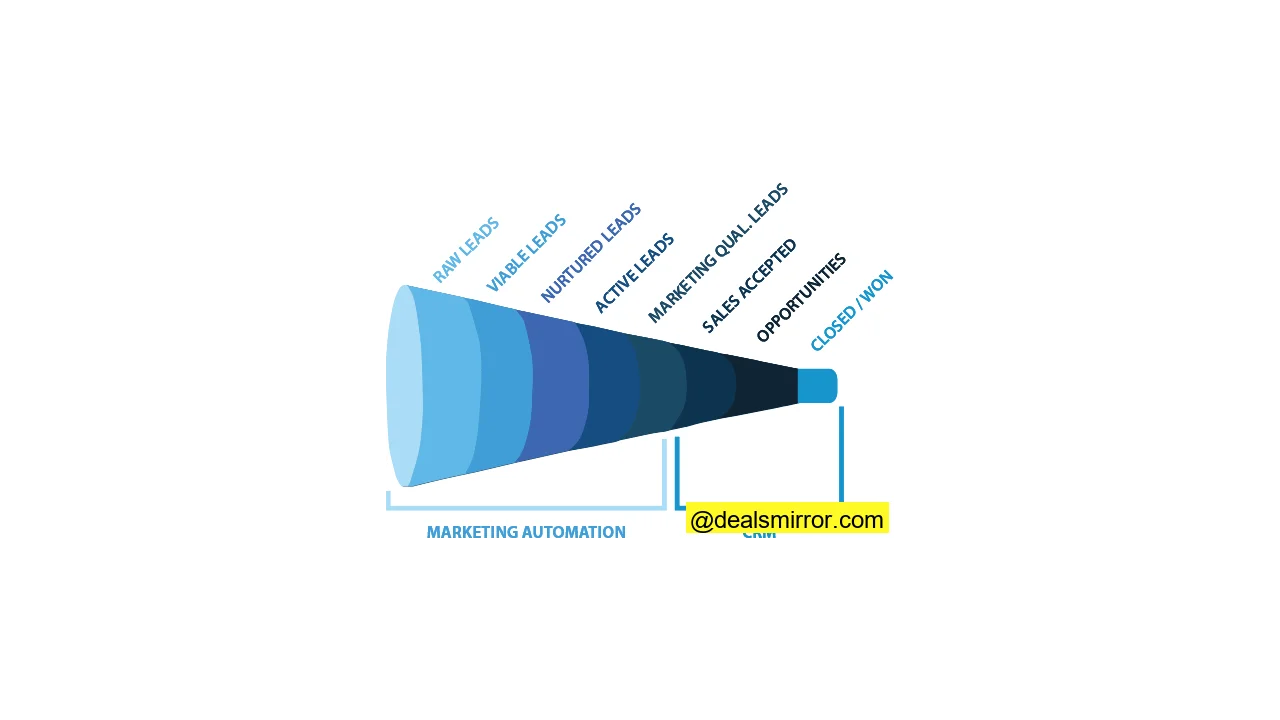
Generally, marketing automation is most impactful at the **top of the funnel**, focusing on attracting, engaging, and nurturing prospects.
What is a CRM Tool?
CRM, or Customer Relationship Management, is a system used for managing and analyzing customer interactions and data throughout the customer lifecycle. The goal of a CRM system is to improve business relationships with customers, assist in customer retention, and drive sales growth. A CRM system acts as a central hub for all customer and prospect information.
The core objectives of a CRM system include:
- Enhancing your ability to identify and target profitable customers.
- Improving the efficiency and effectiveness of your sales force.
- Optimizing pricing strategies for maximum impact.
- Elevating the quality of customer service and support.
- Facilitating the creation of truly customer-centric products and services.
- Connecting customers across all channels on a single, unified platform.
CRM software meticulously organizes and creates comprehensive customer profiles, maintaining records for both existing customers and potential partners. It records critical contact information such as email addresses, phone numbers, websites, and social media profiles. This wealth of data allows marketers to gain a clear, holistic view of the customer journey.
“The purpose of a business is to create a customer.”
– Peter Drucker, management expert
With CRM, you can quickly ascertain a prospect’s company, location, previous contact history, and conversation details. By capturing these interactions and utilizing the information to personalize your sales process, you can cultivate stronger, more meaningful relationships with your customers.
Key Differences Between Marketing Automation and CRM
While both tools are vital for business growth, their primary focus and application differ:
- Marketing Automation: Primarily automates marketing campaigns based on predefined conditions and triggers. It is generally best suited for businesses with **short purchase cycles**, particularly in B2C scenarios where extensive, complex sales funnels are less common. Its strength lies in lead generation, nurturing, and qualifying prospects.
- CRM: Focuses on managing sales processes and keeping sales teams organized through a centralized database. It automatically assigns tasks to sales representatives as leads progress through the sales funnel. CRM is particularly beneficial for businesses with **long purchase cycles**, such as B2B and SaaS companies, where the sales process often involves multiple interactions and considerable persuasion from sales representatives to convert buyers. Its strength lies in managing customer relationships, tracking sales opportunities, and improving customer service post-lead qualification.
Essentially, marketing automation prepares leads for sales, while CRM helps the sales team manage and convert those leads into customers, and then retain them. Let’s explore the specific advantages of each.
4 Compelling Reasons to Implement Marketing Automation Software
1. Streamlined List Management and Segmentation
Modern marketing automation software, especially integrated with email marketing tools, empowers you to effectively manage your contact database through organized lists and segments. It functions as a ‘mini CRM’ by categorizing contacts based on their engagement level and roles:
- Existing customers
- Blog subscribers
- Trial users
- Lead magnet downloaders
- Event registrants, etc.
Through advanced email marketing automation, you can dynamically manage contacts based on their behavior and interests, ensuring that you deliver highly personalized content that truly resonates. Leverage contact data for precise email segmentation based on attributes like:
- Age demographics
- Specific ebook downloads
- Paying customer status
- Subscription date
- Contact’s professional function
- Gender
- Geo-location
This granular segmentation means you no longer have to broadcast generic messages. Instead, you can send highly relevant offers tailored to each contact’s lifecycle stage, interests, and geographical location, significantly boosting engagement and conversion rates.
2. Powerful Triggered Email Autoresponders
Attempting to manage email marketing at scale manually is unsustainable; even with just a handful of customers, the effort quickly becomes overwhelming. Email marketing automation and workflows enable you to create sophisticated sequences of emails that are automatically sent in response to specific customer actions or triggers, such as:
- A website visitor completing a contact form.
- A customer placing an order.
- Booking an appointment for a service.
- Signing up for a product demo or free trial.
- Registering for a webinar or online event.
- Subscribing to an email newsletter.
Email autoresponders are invaluable for automating confirmation emails, delivering timely information, and responding to customer actions instantly when their interest is at its peak.
3. Effective Lead Nurturing
Marketing automation serves as your essential medium for communicating with leads post-generation, with the strategic objective of qualifying them into sales-ready prospects. After investing resources into your lead generation process, robust lead nurturing ensures those valuable leads don’t go to waste.
Effective lead nurturing brings your most qualified leads to the bottom of your sales funnel, primed and ready to convert into paying customers. During this crucial phase, you can:
- Introduce your brand and establish initial rapport with your leads.
- Share valuable content that addresses their pain points and aligns with their interests.
- Guide them seamlessly to the next stage of your sales funnel.
Remember, building trust and authority comes before making a direct sales pitch. Nurturing builds that foundation.
4. Comprehensive Marketing Analytics and Reporting
Marketing automation tools provide an invaluable centralized dashboard where you can access detailed analytics and reports, offering clear insights into the success of your campaigns. This feature helps you focus on the most important Key Performance Indicators (KPIs) by making them easily accessible and understandable, even for marketers who aren’t data analysts.
Understanding your critical KPIs allows you to identify what strategies are working effectively for your business and pinpoint exactly where revenue might be leaking within your funnel. This data-driven approach significantly reduces guesswork, making your marketing processes more strategic and results-oriented.
Just as an airplane pilot relies on their dashboard before takeoff, your business needs clear data to navigate and thrive. Don’t risk losing customers when insights are readily available.
3 Essential Reasons You Need Customer Relationship Management (CRM)
1. Gain a Clear Overview of Your Customer Journey
A powerful CRM tool provides your sales personnel with an indispensable advantage: a clear visualization of where each customer stands within the sales funnel. This insight, often facilitated by customer journey mapping, helps sales teams strategically guide prospects toward closing deals. Customer journey mapping is the process of illustrating every interaction point between your business and the customer, from initial contact to post-purchase support.
“Get closer than ever to your customers. So close that you tell them what they need well before they realize it themselves.”
– Steve Jobs, Co-Founder, and CEO of Apple
To construct a truly insightful customer journey, you need a CRM that seamlessly integrates across multiple marketing and sales channels. CRM provides the critical insights needed for each customer, encompassing all transactions from sales, marketing, and customer support. It helps you:
- Understand their overall experience with your brand.
- Detect potential pain points or downfalls in their journey.
- Identify the specific steps that successfully convert leads into loyal customers.
2. Seamless Integration with Diverse Marketing Channels
Modern businesses utilize a multitude of marketing channels. According to Salesforce, 94% of companies leverage a business website, 83% engage in email marketing, and 79% actively use social media marketing. It’s highly probable your business employs all these, and likely more.
CRM tools are designed to fully coordinate and integrate all your marketing channels by syncing your customer journey data into one centralized location. From the moment a lead likes your Facebook page, visits your website, or signs up for a product, every interaction on any channel you manage is meticulously recorded and synced within your CRM system. This unified view ensures consistency and comprehensive understanding of customer behavior across all touchpoints.
3. Automate Repetitive Sales and Marketing Tasks
Completing a sale involves more than just convincing a customer to buy and processing payment. Alongside the core transaction, numerous administrative tasks must be efficiently performed for everything to function smoothly. These often include:
- Filling out necessary forms and documentation.
- Sending critical reports to relevant stakeholders.
- Issuing legal documents and invoices.
Such tasks are typically time-consuming and repetitive for each new sale. The best CRM systems are specifically engineered to handle these dull, repetitive administrative duties. By automating these processes, your team can dedicate more time and energy to higher-value activities, such as closing leads and effectively resolving customer pain points, while CRM automation meticulously manages the crucial details.
CRM vs. Marketing Automation: A Synergy for Success
When considering CRM versus marketing automation, the optimal approach isn’t about choosing one over the other. Instead, it’s about understanding the unique strengths of each and recognizing how they complement one another to serve a shared, overarching purpose: driving leads from the top to the bottom of your funnel and converting more prospects into loyal, paying customers.
By allowing your automated tools to handle repetitive, mundane tasks, you free up invaluable time. This time can then be reinvested into optimizing and scaling your processes, developing innovative new products or features, or simply enjoying more personal free time. Embrace the synergy of CRM and marketing automation to build a more efficient, customer-centric, and profitable business.
Frequently Asked Questions About CRM and Marketing Automation
1. What parts of my marketing efforts can be automated?
A significant portion of your marketing activities can be effectively automated. Consider leveraging automation for social media marketing, email marketing campaigns, lead generation, and nurturing sequences. Automation can also streamline follow-ups for physical events and even automate elements of your sales pipeline, enhancing efficiency across the board.
2. How can marketing automation benefit an eCommerce store?
Marketing automation offers tremendous support for eCommerce businesses by:
- Rescuing abandoned carts: Automatically sending reminders and incentives to complete purchases.
- Re-engaging past customers: Triggering personalized offers to encourage repeat business.
- Running segmentation: Tailoring product recommendations and promotions based on customer behavior and purchase history.
- Displaying dynamic recommendations: Utilizing dynamic content boxes on your website and in messages to showcase relevant products.
- Sending anniversary promo codes: Delivering personalized birthday or loyalty discounts to foster customer appreciation.
3. How can marketing automation improve my business’s overall performance?
The benefits of marketing automation are substantial. It significantly boosts the sales-readiness of your leads and enhances both marketing and sales productivity and efficiency. By implementing marketing automation, you can increase sales revenues and deepen customer engagement through highly enhanced targeting. Moreover, it provides clear visibility into which marketing campaigns are generating the most sales and offers insights into how individual customers interact with your brand, enabling data-driven optimization.
4. How can CRM help me increase my sales?
A well-implemented CRM solution acts as a powerful sales force multiplier. At its most fundamental level, CRM centralizes all account and contact information, making it readily accessible to accelerate and streamline the sales process. Beyond that, it eliminates the need for scattered notes and spreadsheets by providing a structured way to move leads efficiently through your sales team. You’ll gain clarity on who to call, when to call, and crucially, why you’re calling, enabling a more coordinated and effective sales approach.
5. Is a CRM necessary for a small business or a startup?
Absolutely, yes. If your business has customers, you stand to benefit immensely from a CRM. Even with a small customer base, it’s virtually impossible to memorize and organize every past, present, and future interaction. A CRM provides invaluable business insights, fosters seamless collaboration among employees (virtually connecting team members), and ensures that no valuable information is lost, all without wasting precious time.
6. Does CRM contribute to saving time?
Yes, CRM undeniably saves time. A CRM designed for sales teams helps prioritize tasks, highlights clients who require immediate attention, and provides analytical tools to assess your activities and efforts. By automating administrative tasks and centralizing information, CRM frees up your team to focus on more strategic, revenue-generating activities.
7. How does a CRM solution facilitate teamwork?
Even for small sales teams of 2-4 representatives, keeping track of who is doing what and with what results can be challenging. A CRM specifically built for sales teams allows you to monitor client engagement, understand which team member is working with a particular client, and stay updated on the status of current affairs without interfering with your colleagues’ workflows. This shared, real-time visibility fosters transparency, improves collaboration, and ensures a cohesive approach to customer management.