
In today’s dynamic digital landscape, a company’s success increasingly hinges on its ability to effectively engage customers and optimize marketing efforts. At the heart of this capability lies the marketing stack – a carefully curated collection of marketing technologies designed to achieve specific business objectives.
As the number of available marketing technologies (often referred to as MarTech) continues to skyrocket, so too does the proportion of the tech budget that marketers control. Understanding and strategically building your marketing stack is no longer optional; it’s a critical imperative for competitive advantage and sustained growth.
What Exactly is a B2B Marketing Stack?
If you’re new to the term ‘MarTech,’ consider this your essential primer. This specialized field, encompassing all technologies marketers use, is rapidly transforming the industry. Just as data analysis has become a non-negotiable skill for modern marketers, a deep understanding of existing marketing technologies – how they function, their potential impact, and their true value – is quickly becoming the new professional standard.
Gone are the days when a marketing technology stack was an exclusive domain for CMOs and CIOs of large international corporations. Today, every company, regardless of size, possesses a marketing stack, even if they haven’t explicitly defined it. If you utilize a customer database, leverage email marketing, and power your website with a Content Management System (CMS), you already operate with a foundational three-tiered stack.
Why Your Marketing Stack is Critical for Business Growth
The importance of a well-planned marketing stack is simple: synergy and efficiency. Consider this common scenario: Is your email marketing solution seamlessly integrated with your customer or lead database (CRM)? If not, the valuable data generated by your email campaigns is significantly underutilized. You might be sending irrelevant information to the wrong people at inopportune moments, leading to missed opportunities and frustrated leads.
Without a strategic approach to your marketing stack today, imagine the chaos and inefficiency when your technology ecosystem inevitably grows to ten or more disparate tools. Proactive planning ensures your tools work together, not against each other, maximizing impact and minimizing wasted effort.
The Blueprint for Marketing Stack Success
Building an effective marketing stack isn’t about indiscriminately purchasing the latest, most expensive tools that you may not even have the time to fully utilize. It’s a strategic, phased approach designed to optimize your existing resources and plan for future growth. The journey from your current setup to an ideal, integrated marketing stack involves three core stages:
- Assessing Your Current Landscape: Clearly identify all marketing technologies you currently utilize. What’s working effectively? What’s redundant or underperforming? Where are the critical data silos?
- Strategic Future Planning: Anticipate the technologies you’re likely to acquire or upgrade within the next few years to support your evolving marketing objectives and adapt to market changes.
- Mastering Data Integration: Develop a clear, robust strategy for combining, synchronizing, and leveraging data across all your various solutions. This is the cornerstone of a powerful, insightful stack.
At this juncture, the significance of data cannot be overstated. Whether it’s customer data, performance metrics, website analytics, or keyword insights, your data is an invaluable asset. It provides a significant competitive advantage, regardless of your organization’s size. Your MarTech stack should be meticulously designed to harness, optimize, and maximize the value of this data. Achieving this necessitates integrating your key technologies, a process that is far more attainable than it often sounds.
The Power of Seamless Integration in Your Marketing Stack
Let’s illustrate the critical need for integration with a common example. Imagine you have a CRM (or a lead management tool) and a separate Email Marketing Tool. Your CRM holds the contact details of current customers and prospective leads. It’s relatively easy to export this data and import it into your email tool to create a campaign list. You send out emails and use click-through data to score contacts based on their engagement. Now, you identify the top 10% of responders and want your sales team to follow up immediately.
Here’s where the challenge arises: all the crucial engagement data (opens, clicks, scores) resides in the email marketing solution, while your sales team primarily uses the CRM. This forces a laborious, manual process: you must summarize information, export what you can, import it back into the CRM, and then finally pass it to the sales team.
The real dilemma deepens: How do you decide whether to continue emailing these top responders? Do you manually cross-reference their sales pipeline status in the CRM before each subsequent email? And can you realistically manage this alongside importing new contacts to the email solution and exporting more data to pass back to the sales team? This kind of operational friction is enough to overwhelm any marketing professional!
Establishing Your Marketing Stack’s Foundation
To overcome integration hurdles, start by identifying the cornerstone of your technology stack. This foundational system should hold a broad spectrum of data and be accessible and utilized by as many teams across the business as possible. For most medium-sized businesses, a robust CRM solution typically serves this purpose. Smaller businesses might find a lead management tool, shared by both sales and marketing, to be their base. While Marketing Automation can sometimes form this base component of the stack, it does cut out valuable data visibility from other critical business units like finance, customer service, and operations.
Once you’ve identified your base system, the next crucial step is to ensure that all your regularly used marketing tools can seamlessly integrate with it. This is a true game-changer. With integration, you can segment your central database of contacts based on sophisticated rules. When you identify hot leads ready for sales, the sales team can immediately access their complete interaction history directly within the central solution they’re accustomed to using. This eliminates manual data transfer; leads can be passed on with a single click.
Furthermore, you can leverage the sales status of contacts to intelligently include or exclude them from future email campaigns. Integration streamlines the entire process, making it faster, more secure, and significantly easier for everyone involved.
Essential Components of a Modern Marketing Stack
1. Customer Relationship Management (CRM)
Having identified CRM as the obvious choice for the ‘belt and braces’ of your stack, selecting one that meets your specific needs is paramount. Do you require advanced features such as comprehensive helpdesk functionality, robust project management, or seamless integration with your Enterprise Resource Planning (ERP) system? A well-chosen CRM serves as the central hub for all customer and lead data, making it indispensable.
2. Marketing Automation
Often a popular buzzword, anyone would be forgiven for thinking Marketing Automation is the only tool a marketer needs! While not entirely true, it is incredibly useful. This technology excels at streamlining repetitive marketing tasks like email campaigns, lead nurturing, and social media posting. The key to maximizing its value lies in its integration capabilities. When connected with your CRM and other critical tools, marketing automation significantly simplifies the lead-to-sale process, driving efficiency and personalized engagement.
3. Content Management System (CMS)
If your business operates a website, a Content Management System (CMS) is absolutely essential. A CMS empowers you to create, edit, and manage website content without needing to write HTML code directly. Chances are, most readers of this blog are already CMS pros – whether utilizing platforms like WordPress, Drupal, and Joomla, or even custom-designed solutions by a web agency. Integrating your CMS allows inbound leads generated through your website to flow automatically into your marketing and sales workflows, enabling immediate follow-up.
4. Email Marketing
Email remains an indispensable channel for today’s B2B marketers, showing no signs of weakening its impact. It acts as the cogs in marketing automation, the primary delivery mechanism for valuable content, and carries the identifying beacons to help identify website visitors. Modern email marketing has become incredibly clever, offering sophisticated design tools and advanced segmentation capabilities. By combining robust design features with deep integration to your core data systems, you unlock the full potential of your email marketing efforts.
5. Analytics & Tracking
There’s traditional analytics, such as the well-known Google Analytics. It’s incredibly useful, and we all rely on it to identify how people reach our website and what they do once they’re there. However, it primarily offers macro-level data, which isn’t always helpful when you’re trying to track individual engagement down to a granular level. You absolutely need it, but deep integration might not always be the top priority for this type of tool.
Enter modern Tracking (a common nickname for this newer tech, though you’ll find many others). IP tracking, for instance, identifies business website visitors (with match rates typically ranging from 10-40%). This is excellent for lead generation, but even more powerful for scoring existing leads and customers based on their specific on-site behavior. Find it, integrate it with your CRM, and you’ll uncover profound insights into visitor intent.
6. Ad Technology
If you represent a large company with substantial advertising budgets, you might want to explore integrated PPC (Pay-Per-Click) and affiliate technology to efficiently manage campaigns, budgets, and user access across various platforms. However, if your marketing department isn’t quite so large, deep integration here might not be a primary concern. Most PPC platforms are designed to exist as their own self-contained ecosystems. The most beneficial aspect of ad tech integration for marketers typically involves pulling web visitor data into marketing automation, email, and tracking providers to enrich lead profiles and personalize follow-up.
7. Social Media Management
As a minimum, ensure your social media tools allow you to search hashtags and monitor mentions of your brand, even if you don’t maintain active social accounts. Features beyond that really depend on how important social media is as a strategic channel for your business. It’s worth noting that the larger, more established tech stack components may not integrate seamlessly with niche or rarer social channels. Additionally, platforms like LinkedIn tend to only offer deep API integrations to enterprise-level partners.
8. SEO & Content Marketing Tools
Consider SEO (Search Engine Optimization) and Content Marketing as two giants driving successful inbound strategy. For those deeply committed to inbound principles, extensive exploration of these fields is highly recommended. The sheer volume of specialized tech providers in these sectors means it has become a highly sophisticated game. The larger and more complex your overall marketing tech stack, the more likely you’ll need dedicated SEO and content vendors. Both are also incredibly important for fueling your Marketing Automation efforts with high-quality leads and engagement.
Navigating and Managing Your Expanding Marketing Stack
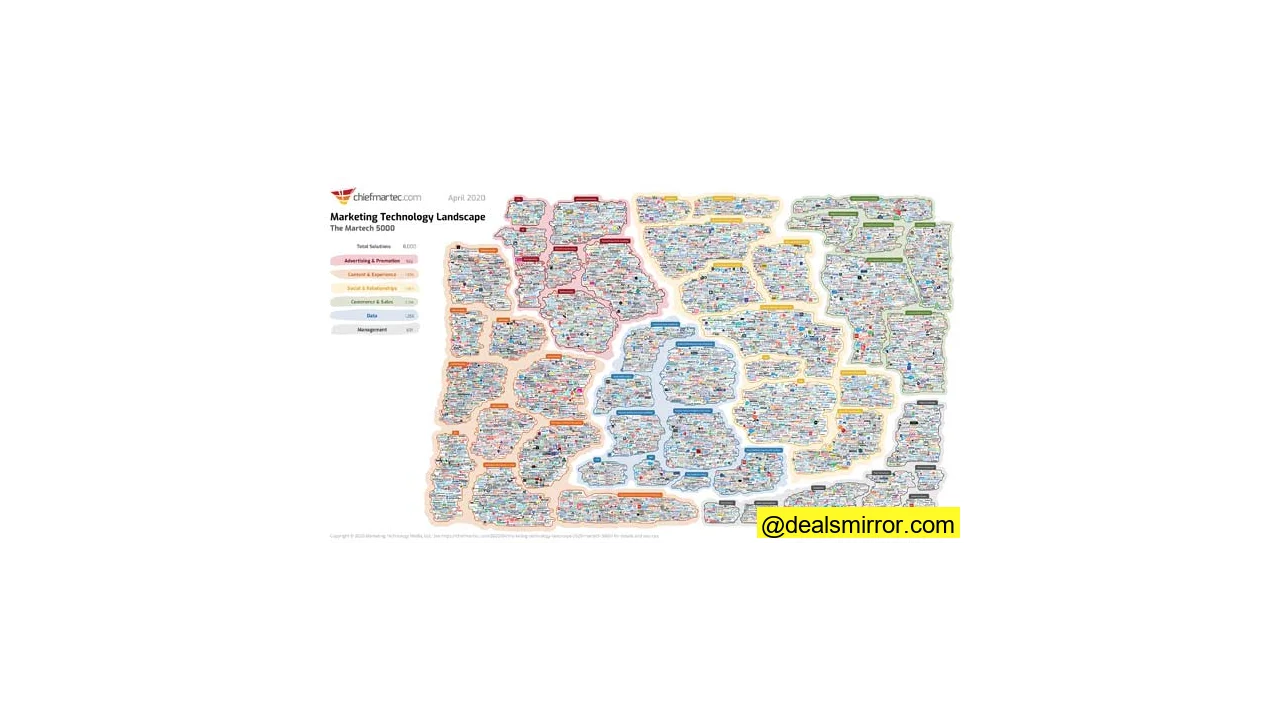
Scott Brinker has been meticulously charting the growth of marketing technology since 2011 with his famous Marketing Technology Landscape supergraphic. What began with just 150 products in 2011 ballooned to a staggering 3,874 products by the 2016 edition shown above (and continues to grow exponentially!). New technologies emerge daily, each promising innovative ways to generate leads, convert website visitors, and create compelling content.
The reality is, your marketing stack will likely expand beyond just a few tools. In fact, the average company’s marketing tech stack now consists of 17 or more tools. Without a conscious effort to plan for their interconnection from the outset, you risk creating expensive, isolated data silos within your organization. This doesn’t even account for other valuable customer data residing in accounting, event management, or sales software.
Therefore, a proactive, integrated approach to your marketing stack is paramount for sustained success and efficient operations. What’s in your marketing stack, and how well does it connect?