Are you navigating the complexities of procurement and finding yourself overwhelmed by endless paperwork, negotiations, and supplier management? You’re not alone. Many businesses grapple with these challenges, but with the right processes and strategic automation, procurement doesn’t have to be a daunting task.
This comprehensive guide will demystify the procurement process, outlining its essential steps, exploring different types, and revealing how automation can revolutionize your operations. Let’s begin by defining procurement and understanding its crucial role in business success, paving the way for optimized efficiency and significant savings.
What is the Procurement Process?
The procurement process is the structured approach businesses take to identify, source, agree on terms, and acquire goods or services from external providers. Often involving competitive bidding or tendering, it’s a meticulously orchestrated sequence designed to ensure a steady supply of necessary resources. When executed effectively, it’s a seamless routine that keeps operations running smoothly from start to finish.
An effective procurement process typically involves these core steps:
- Identify needs for goods and services
- Identify and evaluate suppliers
- Negotiate contracts with suppliers
- Submit requisition, issue purchase order
- Complete payment
- Audit the goods/services received
- Maintain records of invoices
This process extends from the initial discovery of a business’s requirements all the way through to meticulous records management.
A robust procurement strategy serves as your roadmap, a comprehensive game plan detailing how your business will secure required goods and services. It encompasses critical elements like budget allocation, quality specifications, project timeframes, and the cultivation of strong supplier relationships.
The foundation of any procurement process lies in the goods and services themselves. Goods can range from essential raw materials to finished products ready for resale. Services encompass a broad spectrum, from expert consulting and critical maintenance to software subscriptions and professional support.
Procurement vs. Purchasing: Understanding the Distinction
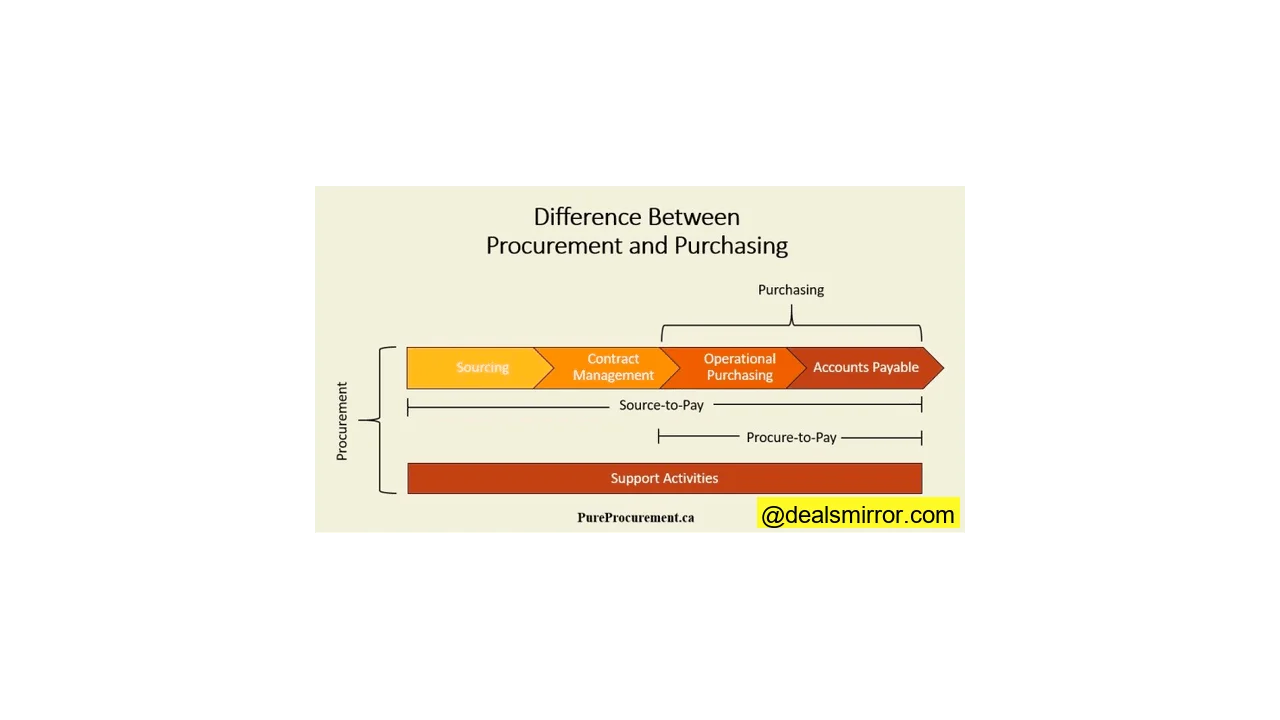
While often used interchangeably, “procurement” and “purchasing” refer to distinct yet interconnected aspects of acquiring resources. Clarifying this difference is key to optimizing your operations.
Purchasing is a subset of procurement; it is the transactional act of buying goods or services. It focuses on the tactical execution of obtaining items, including placing orders, negotiating prices, and coordinating deliveries. Purchasing is primarily concerned with the exchange of money for goods or services.
Procurement, conversely, encompasses the entire end-to-end process involved in strategically sourcing, acquiring, and managing goods and services. It extends far beyond the mere act of making a purchase, including comprehensive planning, thorough supplier evaluation, astute contract negotiation, and proactive relationship management. Procurement adopts a holistic, strategic approach to ensure that an organization’s long-term needs are met efficiently and cost-effectively.
Consider a scenario where a company needs to replenish its office supplies. The procurement process would begin with creating a detailed purchase requisition, specifying items, quantities, and any unique requirements. The procurement team would then evaluate various suppliers, negotiate favorable contracts, and select the best option based on factors like quality, cost, and reliability.
In this example, purchasing focuses solely on the transaction of acquiring the office supplies. Procurement, however, takes a broader, strategic view, considering the entire supply chain, potential savings, and the organization’s overarching long-term goals.
What Are the 4 Core Types of Procurement?
Understanding the different categories of procurement is essential for creating tailored and efficient process flows. Here are the four primary types:
- Direct Procurement: This involves acquiring goods and services directly utilized in the manufacturing or core production process. These are the raw materials, components, and specialized equipment indispensable for creating new products or delivering core services.
- Indirect Procurement: Refers to the acquisition of goods and services necessary for internal business operations but not directly incorporated into the final product. Examples include office supplies, IT services, marketing, travel expenses, and janitorial services.
- Services Procurement: Specifically focuses on the acquisition of services rather than physical goods. This category can include a wide array of offerings, such as consulting fees, temporary staffing, contractor services, legal support, and software subscriptions.
- Goods Procurement: Centers on the acquisition of tangible, physical items. These goods can be used in manufacturing, for daily operational needs, or for resale. Examples range from the raw materials required for production to finished inventory and even office furniture.
Differentiating between these types simplifies the creation of specific procurement process flows, as each category may necessitate distinct steps and considerations. For instance, direct procurement might involve a more rigorous supplier qualification process compared to a routine indirect purchase.
Is Having a Procurement Process Necessary? Absolutely!
You might wonder if a formalized procurement process is truly essential. The answer is a resounding yes. A well-defined procurement process is fundamental to ensuring smooth operations, achieving cost efficiencies, and fostering robust supplier relationships. Let’s delve into the profound impact of a strategic procurement process:
- Identifies Bottlenecks and Drives Efficiency: A structured procurement process helps you pinpoint critical delays and inefficiencies within your operations. By examining each stage, you can identify areas for improvement, streamline workflows, and reduce lead times, leading to increased productivity and fewer operational headaches.
- Highlights Strengths and Weaknesses: The process provides a clear lens through which to assess your operational capabilities. Analyzing each step allows you to identify what works well and where adjustments are needed, empowering you to make informed decisions and enhance overall performance.
- Builds Strong Supplier Relationships: A robust procurement process facilitates the establishment of trust and collaborative partnerships with your suppliers. This proactive engagement leads to higher quality products and services, more reliable on-time deliveries, and mutually beneficial agreements—ultimately contributing to customer satisfaction.
- Generates Significant Cost Savings: This is a major advantage. A strategic procurement process enables you to conduct thorough supplier evaluations, negotiate more favorable contracts, and leverage your collective purchasing power. This leads to securing the best possible prices and terms, delivering substantial cost reductions for your organization.
The 7 Essential Steps of the Procurement Process
Consider this your definitive step-by-step guide to efficiently acquiring the goods and services your business needs—a clear roadmap to supply chain excellence.
Step 1: Identify Needs for Goods and Services
The procurement process begins with a clear understanding of your business’s requirements. Whether it’s a batch of office supplies, critical raw materials for production, or specialized consulting services, accurately define these needs and document them. This foundational step ensures clarity regarding what you’re seeking and why it’s necessary.
Step 2: Identify and Evaluate Suppliers
Once your needs are established, the next crucial step is to locate suitable suppliers. Your procurement team should diligently search for companies capable of fulfilling your requirements while consistently delivering quality products or services. A thorough evaluation should consider their track record, industry reputation, pricing structure, and ability to meet your specific demands.
Step 3: Negotiate Contracts with Suppliers
This stage is where your negotiation expertise comes into play, aiming to secure the most advantageous deal possible. Collaborate with potential suppliers to iron out critical details such as pricing, delivery schedules, payment terms, quality standards, and any unique requirements. The goal is to find a mutually beneficial agreement that optimizes value for your organization.
Step 4: Submit Requisition, Issue Purchase Order
After a supplier has been selected and terms are agreed upon, formalize the commitment. This involves submitting a purchase requisition (an internal request) and then issuing a formal purchase order (PO) to the chosen supplier. This legally binding document precisely outlines the items or services to be purchased, quantities, agreed price, and delivery specifications.
Step 5: Complete Payment
Upon receiving the supplier’s invoice, prompt and accurate payment is essential. Whether through traditional checks or modern online payment systems, ensure timely settlement to maintain positive supplier relationships and smooth financial operations. Adhering to payment terms is a cornerstone of good procurement practice.
Step 6: Audit the Goods/Services Received
A critical verification step involves auditing the goods or services upon receipt. Thoroughly inspect that everything delivered matches your order specifications and meets the agreed-upon quality standards. This crucial step confirms you are receiving precisely what you paid for and helps maintain stringent control over your supply chain management.
Step 7: Maintain Records of Invoices
Diligent record-keeping is vital. Ensure that copies of all invoices and related documentation pertaining to the procurement process are securely stored. This systematic approach aids in accurate expense tracking, facilitates financial reporting, ensures compliance, and provides a clear audit trail should any questions or issues arise in the future.
With these seven strategic steps and the right team, you can build a highly efficient and well-designed procurement process.
Why Should You Automate Procurement Processes?
Efficient procurement processes are indispensable for seamless acquisition of goods and services. However, traditional manual processes are often plagued by challenges that can be both costly and time-consuming. This is precisely where automation emerges as a transformative solution. Let’s explore common procurement hurdles and how automation provides effective remedies.
Challenges in Manual Procurement Processes
- Fragmented Supplier Base: Managing a diverse network of numerous suppliers can be inherently complex and consume significant time. A fragmented supplier base often leads to an inefficient and costly procurement cycle, characterized by confusing contracts and difficulties in consistent negotiations.
- Maverick Spending: When procurement responsibilities are dispersed across many individuals or departments without centralized control, “maverick spending” can occur. This results in uncontrolled expenditures, a significant lack of transparency, and considerable difficulty in accurately tracking and managing expenses.
- Manual Processes: Reliance on manual tasks such as extensive paperwork, redundant data entry, and physical document routing is a recipe for errors, significant delays, and frequent miscommunication. This dramatically slows down the entire procurement process, negatively impacting both productivity and data accuracy.
- Difficulty in Tracking: Manually tracking the status of purchase orders, delivery schedules, and payments can quickly lead to confusion and a lack of oversight. This inefficiency can result in missed deadlines, stock shortages, and overlooked opportunities for cost savings.
Automation as the Solution: Streamlining Procurement
Procurement automation directly addresses these challenges, transforming complex workflows into streamlined operations. With specialized procurement software, businesses gain powerful tools to centralize and manage supplier relationships, negotiate contracts with greater efficacy, and coordinate deliveries seamlessly.
Automation is also highly effective in combating maverick spending. Advanced software allows for the creation of customizable approval workflows, significantly enhancing transparency and expense tracking. Furthermore, you can define specific permissions, ensuring that only authorized procurement teams can make purchases. Crucially, automation dramatically reduces the errors and delays commonly associated with manual processes.
By implementing automation, you gain a robust digital platform for precise tracking of purchase orders, detailed delivery schedules, and timely payments. This eliminates confusion, provides clear visibility, and proactively helps identify valuable savings opportunities.
Here are key features to prioritize when selecting procurement software:
- Supplier Management: Look for software that facilitates easy management and maintenance of comprehensive supplier information. It should allow you to track performance metrics and foster collaboration within a unified portal.
- Purchase Requisition and Order Processing: Effective software automates the entire purchase order lifecycle, eliminating the burden of manual paperwork and expediting the ordering process.
- Contract Management: Essential features include automated contract tracking, proactive renewal alerts, and reminders for expiration dates. Robust procurement software ensures better compliance and significantly reduces contractual risks.
- Automated Approval Workflow: The software should provide highly customizable workflows that intelligently route requests to the appropriate stakeholders for timely review and approval, accelerating decision-making.
- Spend Analytics: Choose software with powerful analytics capabilities to gain deep insights into spending patterns, identify potential areas for cost reduction, and highlight strategic saving opportunities.
Leading Examples of Procurement Software:
- SAP Ariba: A comprehensive procurement software suite offering strategic sourcing, contract management, collaborative supplier engagement, and advanced spend analysis capabilities.
- Coupa: A cloud-based business spend management platform with powerful tools for procurement automation, expense management, electronic invoicing, and integrated supplier management.
- Oracle Procurement Cloud: A service that seamlessly integrates end-to-end procurement processes with broader financial management. It features efficient procure-to-pay cycles, enhanced supplier collaboration, and insightful analytics.
Procurement Process Conclusion
You now possess a comprehensive roadmap to achieving highly efficient operations, unlocking significant cost savings, and cultivating strong, lasting supplier relationships. The journey to procurement mastery involves a clear understanding of your organizational needs, judicious selection of suppliers, expert negotiation, and diligent tracking of every single step.
Embracing the right procurement software can transform this journey. With automation, you can effortlessly manage suppliers, meticulously track expenses, and streamline approval workflows, eliminating the need to juggle multiple disparate systems or drown in endless paperwork. If you’re ready to elevate your procurement processes to an unprecedented level of efficiency and strategic advantage, the time to consider robust procurement software is now.
FAQs About the Procurement Process
What is procurement and its process?
- Identifying needs
- Selecting suppliers
- Negotiating contracts
- Issuing purchase orders
- Receiving goods/services
- Making payments
- Maintaining records
What is the procurement lifecycle?
- Planning
- Supplier selection
- Contract negotiation
- Order fulfillment
- Performance evaluation
What are the types of procurement?
- Direct Procurement: Purchase of goods or services directly related to a company’s core operations or production.
- Indirect Procurement: Purchase of goods or services not directly tied to a company’s core operations, such as office supplies or maintenance services.
- Strategic Procurement: Focuses on long-term partnerships with suppliers to improve efficiency, reduce costs, and drive innovation.
- Tactical Procurement: Involves day-to-day purchasing activities designed to meet immediate operational needs.
- Centralized Procurement: An organizational approach where a single department or entity handles all procurement activities for the entire organization.
- Decentralized Procurement: Involves multiple departments, locations, or business units independently handling their own procurement needs.
What are the documents used in procurement?
- Purchase Requisition: An internal document used to formally initiate a request for goods or services.
- Request for Information (RFI): Asks specific questions about a product or service, often used to determine which vendors will receive an RFP or RFQ.
- Request for Proposal (RFP): Used to solicit detailed proposals from potential suppliers for complex projects or needs.
- Request for Quotation (RFQ): Used to request precise price quotations from suppliers for clearly defined goods or services.
- Purchase Order: A formal, legally binding document issued to a supplier, outlining the exact details of a purchase.
- Invoice: Provided by the supplier to formally request payment for goods or services that have been delivered.
- Contract: A legally binding agreement established between the buyer and supplier, specifying all terms, conditions, and obligations.
What are the 5 R’s in procurement?
- Right Quantity: Ensures that the precise amount of goods or services required is procured, avoiding shortages or excess.
- Right Quality: Procuring goods or services that consistently meet or exceed the specified quality standards.
- Right Time: Securing the timely delivery of goods or the completion of services according to the agreed-upon schedule.
- Right Place: Delivering goods or services to the correct designated location or point of use within the organization.
- Right Price: Obtaining goods or services at a fair, competitive price that aligns with the organization’s budget and value expectations.
What are the 3 types of contracts?
- Fixed-Price Contract: Involves a predefined, set price for goods or services, irrespective of the actual costs incurred by the supplier. This shifts cost risk to the supplier.
- Cost-Reimbursement Contract: Allows for the reimbursement of the supplier’s actual, allowable costs incurred, typically along with an additional agreed-upon fee or profit. This shifts cost risk to the buyer.
- Time and Material (T&M) Contract: Combines elements of both fixed-price and cost-reimbursement contracts. The price is based on an agreed hourly or daily rate for labor (time) and the actual costs of materials used.
What are the 4 goals of purchasing?
- Cost Reduction: Strategically procuring goods and services at the most favorable price to minimize overall expenses and improve profitability.
- Supplier Relationship Management: Building and actively maintaining positive, collaborative relationships with suppliers to foster mutual benefits, drive innovation, and improve process efficiencies.
- Risk Management: Proactively mitigating risks associated with procurement, such as potential supply chain disruptions, quality issues, or contractual disputes.
- Value Creation: Continuously seeking opportunities for innovation, quality improvement, and strategic advantages through astute purchasing decisions that enhance the organization’s overall value proposition.