
Basic email tracking is a foundation, but for true campaign mastery, advanced analytics are non-negotiable. Often, even the most robust Email Service Providers (ESPs) fall short, leaving marketers without the deep insights needed to optimize performance.
It’s in these critical moments that leveraging third-party analytics tools becomes essential. As Sherlock Holmes famously stated, “I never guess. It is a capital mistake to theorize before one has data. Insensibly one begins to twist facts to suit theories, instead of theories to suit facts.”
To move beyond guesswork, here are six key scenarios where external analytics tools can transform your email strategy and where to find them.
1. Sending from an Automated Mail Send System
Not all email campaigns originate from feature-rich ESPs. Simpler automated mail send systems, like PHPMailer, deliver messages effectively but often lack robust tracking for opens, clicks, or engagement. The same limitations can apply to emails sent directly from CMS or CRM systems.
While these bare-bones systems offer a low-cost solution, especially for small businesses or for transactional emails, they provide no inherent data to gauge success or refine your approach. This gap necessitates the integration of a third-party analytics solution.
Advanced Analytics for Transactional Emails
Consider the example of a purchase confirmation email sent from an automated system. While it fulfills a vital communication need, it misses an opportunity for insight. This is where tools like Email on Acid become invaluable. This versatile tool integrates with virtually any mailing system, allowing you to embed a campaign-specific tracking code directly into your email’s HTML.
Email on Acid delivers comprehensive email analytics and reporting, tracking crucial metrics such as opens, clicks, forwards, prints, and even “glances.” It also provides data on subscriber engagement, geographical location, email clients used, click tracking, and benchmarking diagnostics, all designed to enhance your email’s effectiveness.
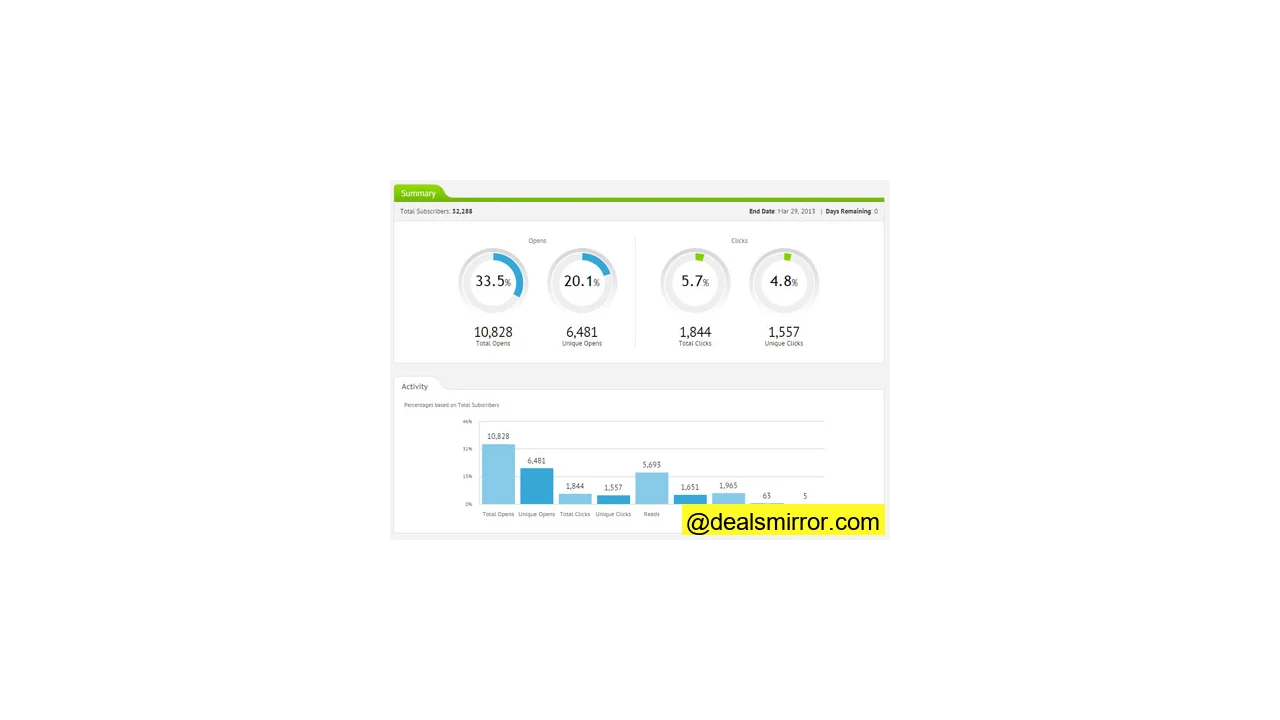
Image source: Email on Acid
2. Tracking Beyond the Click for Website Conversions
While tracking email clicks is fundamental, a click doesn’t automatically equate to a conversion. The true measure of an email campaign’s success often lies in what recipients do *after* they leave your email and land on your website.
Manually tracking website visitors, their journey through the conversion funnel, and automatically attributing these actions back to specific email campaigns can be an incredibly time-consuming and error-prone process. This complexity is precisely why a third-party solution is essential to automate and simplify this critical tracking.
You don’t necessarily need to invest in an entirely new platform for this level of tracking. Google Analytics offers robust web tracking capabilities. By integrating its tracking codes into your website and properly tagging your email campaigns, you can gain a deeper understanding of how recipients interact with your site post-click. This allows you to isolate visitors referred from email campaigns, analyze their preferences, and understand their behavior patterns, providing invaluable data for conversion optimization.
3. Implementing Rigorous A/B Testing
Even minor adjustments in an email campaign can lead to significant improvements in your bottom line, making A/B testing a top priority. A/B testing is a powerful diagnostic tool that helps you understand visitor behaviors and priorities. If your ESP lacks advanced A/B testing functionalities, leveraging a third-party analytics tool becomes crucial. Beyond its effectiveness in refining successful marketing elements, A/B testing is also surprisingly easy to set up for basic scenarios.
Here are common elements you can split test to optimize your email campaigns:
- Your Call to Action (CTA)
- Leveraging a Free Trial vs. direct purchase
- Credit Card required vs. No Credit Card for trials
- Varying Your Offers and promotions
- Using Different Creatives (images, layouts)
For example, MovableInk provides an intelligent solution to many A/B testing challenges. It enables you to upload multiple image-based creative variations, test them concurrently, and automatically identify the top performers. This eliminates the lengthy process of manually sifting through data to determine which email creative was most engaging, effectively putting your testing on autopilot.
In today’s digital landscape, marketers cannot solely rely on intuition when determining what resonates with their audience. A/B testing delivers the concrete facts and in-depth data necessary for optimal conversion rates.
4. Streamlining E-commerce Email Automation
The prevalence of online shopping means e-commerce storefronts are fundamental to nearly every business website. Email plays a pivotal role in the e-commerce experience, even for tangible products. When customers make an online purchase, their immediate expectation is a confirmation email with transaction details and product information.
This necessity often requires integrating a third-party tool with your ESP to automate essential post-purchase follow-up emails. Beyond mere confirmations, these follow-up emails present a strategic opportunity for targeted marketing campaigns, such as upsells.
By leveraging e-commerce analytics, you can significantly boost sales by offering personalized upsells and discounts. These can be dynamically based on customer purchase amounts, dates, specific promo codes used, and other relevant behaviors, creating a more tailored and effective customer journey.
5. Enhancing Personalization with Email Analytics
A generic, one-size-fits-all approach to email marketing is ineffective when addressing a diverse audience. Most businesses cater to multiple consumer segments, necessitating a robust personalization strategy for email campaigns.
This personalization extends far beyond simply using a recipient’s first name through merge tags. It encompasses sophisticated third-party image rendering tools like Monetate, which elevate personalization to an entirely new level.
An advanced email personalization tool can make your emails highly relevant to each subscriber by delivering dynamic content. Crucially, this content can be triggered *when your subscriber opens the email*, rather than when the campaign was originally sent. This allows marketers to segment their audience and incorporate dynamic content that ensures the most relevant message is delivered at the precise moment of engagement.
Does the Weather Influence Buying Behavior?
This fascinating question touches upon a unique intersection of analytics and personalization. While it’s primarily used for personalization, it also involves analyzing the impact of external conditions on email engagement and purchasing behavior. For example, Skymosity offers a specialized weather analytics function. This allows businesses to understand how factors like rain, snow, or temperature fluctuations can influence email open rates, click-through rates, and ultimately, conversions.
6. Interpreting Analytics from Multiple Sources
Email analytics is often just one piece of a larger marketing puzzle. To truly assess and optimize campaign success, you frequently need to compare reports and metrics from various sources. Gaining a unified visual representation and comprehensive understanding of your data across all channels is where a tool like Tableau excels.
Tableau is a powerful software that enables you to visualize and understand data from diverse analytic sources within a single, external stats dashboard. For instance, you can seamlessly blend email performance data with insights from e-commerce platforms, CRM systems, social media, and web analytics. This integrated dashboard provides a holistic view, finally consolidating your “big data” into one coherent and actionable interface.
Quantify the Success of Your Email Campaigns
No marketing campaign or customer exists in isolation. To truly measure the impact of your efforts, it’s vital to identify and leverage the right tools for tracking appropriate metrics. The scenarios outlined above illuminate specific instances where introducing third-party analytics can be instrumental in uncovering audience motivations and understanding customer behavior, ultimately leading to more effective and profitable email strategies.