
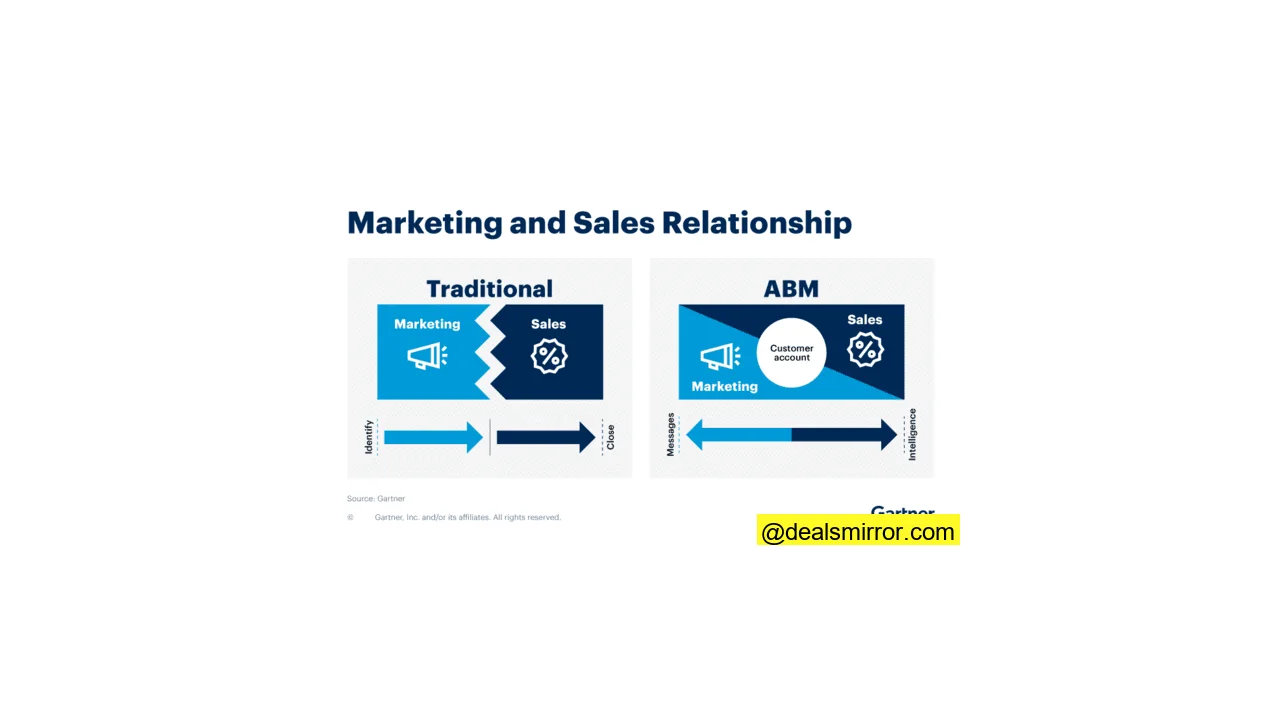
Account-based marketing (ABM) is revolutionizing how B2B companies approach sales and marketing. Drawing inspiration from the personalized, targeted strategies long employed in B2C, ABM empowers B2B organizations to deliver highly relevant messaging that drives significant sales and growth. It’s a strategic shift that fosters unprecedented collaboration between sales and marketing teams, focusing their combined efforts on the accounts that matter most.
What is Account-Based Marketing? An ABM Definition
Understanding ABM begins with recognizing its core principle: a focused, personalized approach to high-value targets. Here are four popular definitions that encapsulate the essence of ABM:
* Account-based marketing is a strategic approach that focuses on high-value accounts in a market or business.
* Account-based marketing is a B2B strategy that sales and marketing departments use to focus their efforts on specific organizations, or accounts.
* Account-based marketing (ABM) is a B2B marketing strategy for high-value customer accounts. In ABM, you focus on each account as a “market of one,” offering highly personalized 1-to-1 experiences and tailored content.
* Account-based marketing creates the opportunity for sales teams and marketing teams to deliver highly personalized, targeted marketing to companies (accounts) that best fit the business and create the most long-term value (sales).
In essence, ABM is highly **targeted marketing** for B2B – a personalized, strategic approach concentrated on high-value prospects or existing customers.
Today’s customers expect connected, targeted experiences, and businesses that deliver are significantly rewarded.
The demand for personalized engagement is clear:
1. **Consumers expect targeted marketing:** Research from Salesforce indicates that 73% of customers expect companies to understand their unique needs and expectations.
2. **Customers expect consistent interactions:** Salesforce’s State of the Connected Customer Report showed that 79% of customers expect consistent interactions across departments.
3. **Targeted marketing drives revenue:** McKinsey research found that companies excelling at personalization generate 40% more revenue from those activities compared to average performers.
What Kind of Companies Should Adopt Account-Based Marketing?
ABM is typically best suited for business-to-business (B2B) enterprise-level companies with substantial budgets. Organizations that exhibit the following characteristics are most likely to realize significant value from an ABM strategy:
Have Long Sales Cycles
Businesses with extended sales cycles, where purchasing decisions involve multiple stakeholders and necessitate a highly personalized approach, can leverage ABM to cultivate relationships effectively over time.
Have Highly Customizable Products or Services
Companies offering products or services with high customization potential, where the value proposition varies significantly for each client, greatly benefit from ABM’s tailored messaging and content creation capabilities.
Offer Complex Products
Businesses providing intricate products that demand a deep understanding of a client’s specific needs and challenges are ideally suited for ABM. The personalized approach helps to clearly communicate the complexities and benefits of these offerings.
Operate within Niche Markets
Companies operating in niche markets or offering specialized products (e.g., healthcare technology), where a focused and targeted approach is far more effective than broad-reaching marketing, will find ABM exceptionally advantageous.
Have a Clear Ideal Customer Profile
Organizations with a well-defined Ideal Customer Profile (ICP) can implement ABM with precision. Knowing the characteristics of their best-fit customers enables them to identify and target similar accounts accurately.
Have a Strong Alignment Between Sales and Marketing
A successful ABM strategy hinges on robust alignment between sales and marketing teams. Companies where these departments actively collaborate to target, engage, and close deals are far more likely to see positive ABM results.
Have a Data-Driven Culture
ABM relies heavily on data for identifying accounts, personalizing content, and measuring success. Companies that prioritize data-driven decision-making are better equipped to implement and optimize an ABM strategy effectively.
Have Limited Marketing Resources
Companies with constrained marketing resources benefit from ABM by concentrating their efforts on a select group of high-potential accounts. This targeted approach maximizes the impact of their ABM strategy and resource allocation.
The 5 Main Benefits of Account-Based Marketing
Account-based marketing offers several distinct advantages over traditional B2B marketing approaches:
1. **Personalized Approach**
* ABM is highly personalized to fit a specific audience, leading to more effective marketing campaigns compared to traditional B2B marketing.
* This personalization fosters stronger connections with the target audience, enhancing engagement and increasing the likelihood of successful conversions.
2. **Cost-Effective**
* ABM utilizes resources more efficiently by reducing wasted efforts on accounts that may not be the best fit.
* Marketing and sales teams can allocate resources precisely, avoiding wasteful spending on broad campaigns that may not yield significant returns, ultimately resulting in a higher return on investment (ROI).
3. **Higher Value Customers**
* ABM focuses on targeting high-value accounts that closely align with a company’s products or services.
* By concentrating on accounts with potential for larger deal sizes, higher retention rates, and increased lifetime value, businesses attract and acquire customers that contribute substantially to growth.
4. **Connected Experience**
* Sales and marketing teams are aligned around a single audience and campaign, creating a seamless and connected experience for prospects. Prospects often reward businesses that deliver such connected experiences with increased sales.
5. **Retention & Long-Term Value Focus**
* ABM emphasizes nurturing relationships with high-value accounts to build long-term value.
* This strategy aims to build sustained and meaningful connections, leading to increased customer loyalty, repeat business, and advocacy.
How to Adopt Account-Based Marketing
To successfully implement account-based marketing, companies should follow a structured five-step process:
1. Build an Account-Based Marketing Team
Building an effective ABM team requires assembling a diverse group of sales and marketing professionals who are aligned around specific goals and objectives. Team members need clearly defined roles and access to the necessary tools, processes, and technologies to support collaboration.
**Key Roles for Account-Based Marketing Teams:**
ABM teams integrate roles across sales and marketing to engage target accounts throughout the B2B decision-maker buying journey. These roles should be clearly defined:
* **Account-Based Marketing Lead:** Responsible for the overall ABM strategy and coordination.
* **Data Analysts:** Analyze sales and marketing data from ABM campaigns to provide insights.
* **Content Marketers:** Create tailored content specifically for target accounts.
* **Sales Development Representatives (SDRs):** Engage with accounts to qualify them and schedule sales appointments with Account Executives.
* **Account Executives:** Collaborate with SDRs and the marketing team to engage and convert accounts into clients or grow existing accounts.
* **Marketing Automation Specialists:** Manage tools for automation and tracking ABM activities.
**Fostering Account-Based Marketing Team Collaboration:**
Sales and marketing teams may not always naturally collaborate, but success in ABM depends on it. Effective teams foster regular communication, share alignment on goals and objectives, and conduct joint planning sessions to ensure ABM programs succeed.
Effective teams also ensure all members use shared **account-based marketing tools**, including analytics tools.
2. Identify Target Accounts
Identifying target accounts is a crucial collaborative process involving both sales and marketing. These teams must work together to pinpoint accounts that best align with the business’s products and services and have the highest potential for generating revenue.
Begin by creating your **Ideal Customer Profile (ICP)**. To build a solid list of target accounts, consider the following factors:
* **Industry:** Include industries that align with your business goals and where your products provide the most value.
* **Company Size:** Determine the ideal size of companies (from small businesses to large enterprises) that are most likely to benefit from your offerings.
* **Location:** Identify geographical areas where strong demand exists for your products or services.
* **Revenue:** Identify the revenue range of ideal customer companies to ensure they have the financial capacity for your products.
* **Company Challenges:** Understand the specific challenges and pain points faced by your target accounts to inform how to market your products effectively.
* **Long-Term Relationship Potential:** Identify accounts that are likely to establish enduring relationships with your company, leading to long-term value.
Defining your ICP is an ongoing process, not a one-time activity. It should incorporate current customer feedback and adapt to evolving market dynamics and needs.
Once your ICP is defined, determine which specific accounts have the highest probability of becoming high-value customers. Consider these factors to identify truly high-value accounts:
1. **Alternative Companies:** Determine if competitors selling similar products or services are likely to target the same accounts, indicating market interest.
2. **Budget:** Assess the account’s potential contribution to your revenue.
3. **Growth Opportunities:** Determine the probability of growing the account with your products based on their current focus areas and future needs.
3. Develop Personalized Content
To develop personalized account-based marketing content, companies must create marketing and sales messages tailored to meet the specific needs and challenges of individual accounts. This content should be designed to address the distinct requirements of high-value accounts, ultimately increasing the effectiveness of ABM tactics and campaigns in driving conversions and long-term customer value.
To create content that truly resonates, follow these principles:
1. **Understand Your Target Accounts:** Foundational knowledge of your target accounts forms the basis for creating truly impactful content.
2. **Create Detailed Buyer Personas:** Develop detailed buyer personas within your Ideal Customer Profile (ICP). These personas represent the key decision-makers and influencers within the accounts. Consider their roles, responsibilities, preferences, and communication styles to inform your content strategy.
3. **Use Account Insights:** Leverage data and insights gathered from interactions with accounts. Analyze engagement data, website visits, and any other relevant information to understand what content has previously captured their interest.
4. Deploy Omnichannel Outreach
B2B decision-makers utilize numerous marketing channels on their path to a purchasing decision. According to McKinsey, they may use up to 10 different channels, encompassing both digital and traditional marketing:
* Email
* In-person
* Phone
* Website
* Procurement Departments
* Mobile Applications
* Procurement Online Portals
* Video Conference
* Web chat
* Google Search
Companies that engage B2B decision-makers across more channels are rewarded. The same McKinsey study highlights that B2B companies engaging prospects through more channels grow at a faster rate.
Account-based marketing ensures prospects are reached in their preferred marketing channels, significantly increasing engagement opportunities. To adopt a successful omnichannel approach, strong alignment between sales and marketing is crucial for coordinating outreach efforts.
All outreach efforts should be meticulously cataloged and shared with ABM team members in real-time to ensure everyone is aligned on communication. Ensure all team members performing outreach are aware of the following information:
* **Stage of Buying Process:** Content needs to align with different stages of the buying journey – from awareness and consideration to decision-making. Tailor content to address the specific needs at each stage.
* **Account Goals and Pain Points:** In messaging, address the specific pain points and goals of each account to convey a deep understanding of their unique challenges.
* **Content Type Preferences:** Some accounts may prefer whitepapers, while others might engage more with webinars or interactive content. Adjust content format to individual preferences.
5. Measure Performance and Iterate
Measuring the success of your account-based marketing tactics is paramount for optimizing strategies and demonstrating their impact on business outcomes. Metrics should be reviewed regularly across all ABM team members. Teams should evaluate performance across three key areas: overall ABM performance, marketing metrics, and sales metrics.
**Account-Based Marketing Metrics:**
* **Revenue Impact:** ABM success is directly reflected in revenue. Measure the revenue generated from accounts engaged through ABM activities. Compare this with overall revenue to assess the percentage contribution.
* **Customer Acquisition Cost (CAC):** Evaluate the cost-effectiveness of acquiring customers through ABM. Calculate your ABM CAC and compare it to other marketing channels.
* **Account-Based Marketing Program ROI:** Compare the revenue generated from ABM campaigns to the costs incurred in running them. Consider both direct and indirect costs.
* **Customer Retention and Expansion:** ABM efforts can significantly contribute to the loyalty of existing customers and lead to valuable upsell opportunities.
* **Customer Lifetime Value (CLV):** ABM should contribute to attracting and retaining high-value customers, positively influencing their Customer Lifetime Value.
Companies will also need to track specific marketing and sales metrics within their ABM campaigns.
**Marketing Metrics:**
* **Account Engagement Metrics:** Monitor engagement metrics specific to accounts, such as website visits, content downloads, webinar attendance, and social media interactions.
* **Conversion Rates:** Track conversion rates at different ABM funnel stages. Measure how accounts progress from awareness to consideration to conversion.
**Sales Metrics:**
* **Pipeline Contribution:** Track the number of leads generated, opportunities created, and the overall pipeline value directly attributed to ABM tactics.
* **Deal Velocity:** If ABM is accelerating the sales process, it indicates success. Compare the deal velocity of ABM-engaged accounts versus non-ABM accounts.
This account-based marketing framework helps ABM teams align the prospect journey with the customer journey, outlining goals, strategies, content, stakeholders, and success metrics for each step. This high-level approach provides a solid starting point for unlocking value with ABM, ensuring teams focus on the right strategies and tactics to move prospects into buyers and lifetime accounts.
The TOPO account-based marketing framework also offers valuable guidance, including eight focus areas: define your target accounts, develop your strategy, build your list of target accounts, align your teams, create compelling offers and content, deploy content to marketing channels, measure results, and leverage technology to deliver account value.
5 Account-Based Marketing Platforms
Specialized software platforms have emerged to support account-based marketing, catering to B2B marketers’ need for personalized and targeted engagement with key accounts. These applications offer features for identifying key accounts, lead scoring, personalization, campaign management, analytics, and reporting. Here are five top software options to consider:
1. Salesforce Marketing Cloud Account Engagement
Salesforce Marketing Cloud Account Engagement (formerly Pardot) is Salesforce’s robust B2B marketing automation tool. Deeply integrated with Salesforce CRM products, it’s an attractive offering for breaking down data silos between marketing and sales teams.
It boasts a minimal learning curve, with certification programs available through the Salesforce Trailhead community for those seeking expertise. The tool can connect with digital ad platforms to launch comprehensive campaigns across the customer journey.

Salesforce does not offer a free trial. Pricing starts at $1,250 per month and scales based on the number of contacts in your database and desired features.
Pros
- Straightforward to get started on the platform
- Integrations with other Salesforce products are relatively easy to configure
- Can extend Marketing Cloud Account Engagement capabilities with the Salesforce AppExchange and Marketing App Extensions
Cons
- Out-of-the-box reporting is limited in scope
- Not specifically designed as an ABM tool – rather, it was built as a B2B marketing automation engine that includes ABM tools
2. Hubspot ABM Software
Hubspot ABM software is an all-in-one marketing automation platform. This software helps identify target accounts, aids marketers in developing and deploying personalized content, and measures campaign results.

Hubspot ABM integrates seamlessly with collaboration tools like Slack and social channels such as LinkedIn, facilitating stronger collaboration and content deployment for marketing and sales teams. It also integrates with Hubspot’s CRM suite, which helps automate tasks including sending emails and assigning tasks to team members.

There is no free trial for Hubspot ABM, and pricing starts at $800 per month. Pricing is based on the number of contacts and the customization features you wish to explore.
Pros
- User-friendly UI that’s approachable to learn compared to other tools
- Integrations with other platforms are straightforward
Cons
- Features like customer journey analytics, predictive lead scoring, and multi-touch attribution are often limited to Enterprise plans (significantly more expensive)
- Landing page designs and editors are not always attractive or easy to use.
3. Adobe Marketo Engage
Adobe Marketo Engage is a self-reported largest marketing automation platform, allowing you to manage ABM efforts within a single, powerful platform.
There is no free trial for the software, and purchasing requires a custom quote based on the company’s database size and the number of users. The software provides excellent tools for creating and managing ABM campaigns. Marketo Engage is unique in the marketplace due to its integration with other Adobe products, including web analytics, customer data, and Customer Data Platform (CDP) capabilities.
Pros
- One-size-fits-all approach suitable for most industries
- Robust tools for creating and managing campaigns
- Ability to combine with other Adobe products (Adobe Analytics, Adobe Workfront, CDP) creates a unique value proposition.
Cons
- Steep learning curve to master the platform
- CRM integrations have reported issues with setup and maintenance.
4. Demandbase
Demandbase is an all-in-one account-based marketing software tool with features built from the ground up specifically for B2B. Unlike many other ABM tools, Demandbase includes a custom Demand-Side Platform (DSP) designed for B2B marketers. As such, Demandbase provides excellent tools to identify accounts, generate account insights, and quickly create target account lists.

Demandbase gives users access to precise account-level data from a variety of input data sources (e.g., IP address data, intent data, firmographics) to help deliver integrated sales and marketing campaigns.

Similar to other ABM software, Demandbase does not offer a free trial, requiring companies to secure a custom quote to get started.
Pros
- Leader in account identification and account insights
- Great personalization features for campaign execution
- Demandbase B2B DSP self-optimizes campaigns through AI to maximize performance
Cons
- Could use improvement in contact selection tools
- Challenging to manage communications across multiple journey stages
5. Terminus
Terminus delivers significant value for B2B marketers, enabling account-based marketing teams to confidently break down silos with sales teams and work together in a single source of truth. It particularly excels in its personalization capabilities, claiming on its website that ABM campaigns can be launched across the most engagement channels of any ABM platform, including conversational marketing, web personalization, LinkedIn, connected TV, and audio ads. Robust campaign reporting makes Terminus a strong option for marketers.

Terminus also provides step-by-step ABM playbooks that cover the entire customer lifecycle. This is particularly beneficial for companies just beginning their account-based marketing journey.
Similar to other ABM software, Terminus does not offer a free trial and requires custom pricing.
Pros
- Great personalization features for campaign execution – particularly email
- Integrations with other platforms are straightforward
Cons
- Lead scoring could use improvement
- Small UX challenges across the platform
- Orchestration across channels can be challenging
Conclusion: What is Account-Based Marketing?
Account-based marketing (ABM) empowers B2B marketing and sales teams to deliver personalized, targeted marketing to high-value accounts. Companies that strategically implement ABM can anticipate a cost-effective way to acquire higher-value, long-term customers and prospects.
To get started with account-based marketing, focus on building a cohesive ABM team, precisely identifying target accounts, developing highly personalized content, deploying consistent omnichannel outreach, and rigorously measuring the success of your strategies. When selecting software to support your ABM initiatives, consider leading tools like Salesforce Marketing Cloud Account Engagement, Hubspot ABM Software, Adobe Marketo Engage, Demandbase, and Terminus, which offer comprehensive features to elevate your ABM program.
Frequently Asked Questions About Account-Based Marketing
What are common mistakes when adopting account-based marketing?
Common mistakes to avoid when adopting account-based marketing include:
- Neglecting collaboration between sales and marketing
- Inadequate skill diversity within the ABM team
- Overlooking the importance of thorough account research
- Targeting accounts too broadly instead of focusing on high-value fits
- Ignoring the need for highly relevant and personalized content
- Relying solely on technology for outreach without strategic human interaction
- Failure to align ABM activities with distinct account sales cycles
- Lack of consistent measurement and analytics
- Measuring only vanity metrics (e.g., impressions, engagements) without tracking true business impact
What are drawbacks to account-based marketing?
While highly effective, account-based marketing does have potential drawbacks:
- Can be resource-intensive, requiring significant investment in time and tools
- Limited account reach compared to traditional broad B2B marketing approaches
- Complex implementation due to integrating sophisticated software, diverse teams, and intricate processes
- May involve longer sales cycles compared to some other marketing approaches, as it focuses on deep engagement
- Potential for “over-personalization” in campaigns, which can sometimes be perceived as intrusive or “creepy”
What can ABM software help account-based marketing teams accomplish?
Account-based marketing software helps ABM teams accomplish various critical tasks:
- **Target Account Identification:** Identifies high-value target accounts based on predefined criteria.
- **Personalization:** Supports the creation and delivery of highly relevant content and messaging for targeted accounts.
- **Omnichannel Campaigns:** Facilitates the execution of omnichannel campaigns across various marketing channels.
- **Automation:** Automates repetitive tasks associated with ABM, such as sending personalized emails, tracking engagement, and updating CRM records.
- **Integration with CRM systems:** Integrates seamlessly with CRM systems to synchronize data between sales and marketing teams.
- **Lead Scoring and Prioritization:** Incorporates lead scoring mechanisms to prioritize leads from target accounts based on their engagement and behavior.
- **Analytics and Reporting:** Provides robust analytics and reporting features to measure the performance and ROI of ABM campaigns.
- **Collaboration and Alignment:** Facilitates enhanced collaboration and communication between sales and marketing teams.
What is LinkedIn account-based marketing?
LinkedIn account-based marketing leverages the unique capabilities of the LinkedIn platform to target and engage specific high-value accounts. LinkedIn ABM may utilize tools such as LinkedIn Sales Navigator, LinkedIn Ads, and LinkedIn InMail to perform targeted ABM activities, connect with key decision-makers, and deliver personalized content.