
Email marketers are constantly seeking ways to enhance their programs, boost efficiency, and save valuable time. Marketing automation stands out as a powerful solution, promising significant impact and streamlined operations for any email strategy. But what exactly are the core components of this transformative approach, and what should you prioritize when adopting it?
What is Marketing Automation? The Power of Insight
While definitions may vary, marketing automation fundamentally revolves around a process that leverages deep customer insight, meticulously gathered through comprehensive data collection. This insight then fuels automated campaigns designed to nurture customers throughout their journey.
Think of it this way: **Marketing automation is to the digital marketer what CRM (Customer Relationship Management) is to the offline marketer.** When implemented effectively, campaigns driven by marketing automation are incredibly targeted and highly relevant to each individual consumer, creating a seamless, 1-to-1 experience between your brand and its audience.
Like traditional CRM, marketing automation excels at:
- Increasing the effectiveness of marketing activities through highly relevant communications.
- Providing superior management and oversight of complex marketing programs.
- Accurately measuring the tangible impact of marketing efforts on sales outcomes.
Real-Time Responsiveness: The King of Effective Marketing
The critical distinction separating CRM from marketing automation lies in one crucial factor: **timing!** It is the ultimate differentiator. In the realm of marketing automation, we can achieve near real-time interactions, especially when we harness the power of event-driven emails. This capability makes it infinitely more potent than traditional offline CRM. A classic example is a basket abandonment email program, but its true strength lies in how swiftly all forms of communication can be managed, and, most importantly, how rapidly data can be captured and processed to inform these actions.
The 4 R’s of Real-Time Targeting
Marketing automation elevates the strategy of relevance and targeting to unprecedented levels. By consolidating all customer activity into one integrated database, marketers gain an unparalleled understanding of how to effectively engage their users.
This comprehensive approach provides the power to automatically set up dynamic campaigns based on these real-time insights. The ability to execute all of this in a real-time environment is precisely what elevates it far above systems like offline CRM. It equips you with the tools to ensure you consistently hit all **4 R’s of Real-Time Targeting**: effectively reaching the **Right people**, with the **Right message**, at the **Right time**, and through the **Right channel**.
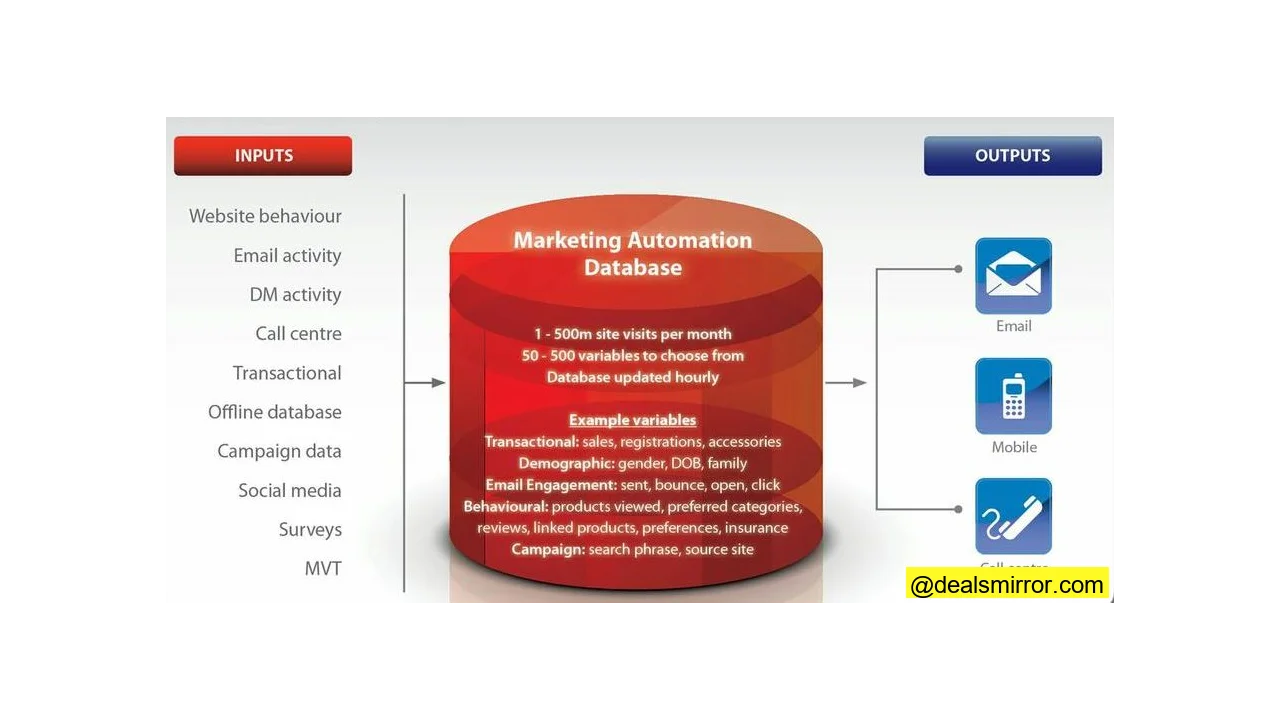
Fig. 1 shows how a marketing automation database should work, enabling a range of data feeds to be integrated
As illustrated, data streams in from diverse sources. This makes it absolutely vital that your marketing automation database is purpose-built to seamlessly handle all these disparate inputs, rather than simply being an add-on to an existing system lacking such comprehensive capabilities.
The Core Challenge: Building a Robust Marketing Automation Database
At the very heart of any successful marketing automation strategy lies the database – the central repository holding all customer data in one unified location. By leveraging this integrated data, marketers can meticulously assess patterns and correlations that lead to sales, thereby enabling the creation of precise strategies to effectively target and nurture users.
The Pitfalls of Mixing Real-Time with Legacy Databases
A common misconception is that marketers can kickstart their marketing automation journey by simply integrating digital data into an existing CRM database. This approach is fundamentally flawed! The reality is not that simple, primarily due to the inherent differences between online and offline data. Traditional offline data is typically structured around household names and physical addresses, often updated daily. In contrast, online data is centered on email addresses and cookie information, demanding a far more real-time processing capability.
**Merging or plugging in disparate databases is deceptively complex.**
Attempting to simply “plug in” real-time digital data into an older, traditional CRM database for processing is akin to explaining email as “just like sending a letter, but on a computer” to an elderly relative. While you might draw a surface-level comparison, it completely overlooks all the inherent and powerful advantages of email – its instant delivery, rapid arrival to the user, automatic spelling checks, and much more.
For many marketers, embracing marketing automation represents a significant leap towards achieving the full potential of the 4 R’s of real-time marketing. Therefore, it is paramount to ensure you invest in and implement the correct system that can truly deliver on this transformative promise.
Image via flickr