
SMS marketing has long been a robust and effective channel for businesses. While some brands fully embrace text messaging, others hesitate, concerned it might be too intrusive or push customers away. However, compelling evidence demonstrates that SMS marketing delivers significant results for nearly any ecommerce company looking to enhance brand awareness, encourage customer engagement, and stimulate sales.
If you’re wondering why you should start collecting mobile numbers and incorporating SMS into your strategy, this guide will show you how text messaging can benefit your business, along with practical steps for getting started. We’ll also provide inspiring SMS marketing examples to spark your creativity.
What is SMS Marketing and How Does it Differ?
At its core, SMS marketing is text message marketing, with SMS standing for “Short Message Service.” Ecommerce marketers leverage SMS campaigns to boost brand visibility, drive customer interaction, and increase revenue. While SMS campaigns have been available for a considerable time, modern customers often expect a more sophisticated experience. Savvy marketers understand the expanded options for delivering this:
MMS (Multimedia Messaging Service) for Enhanced Impact
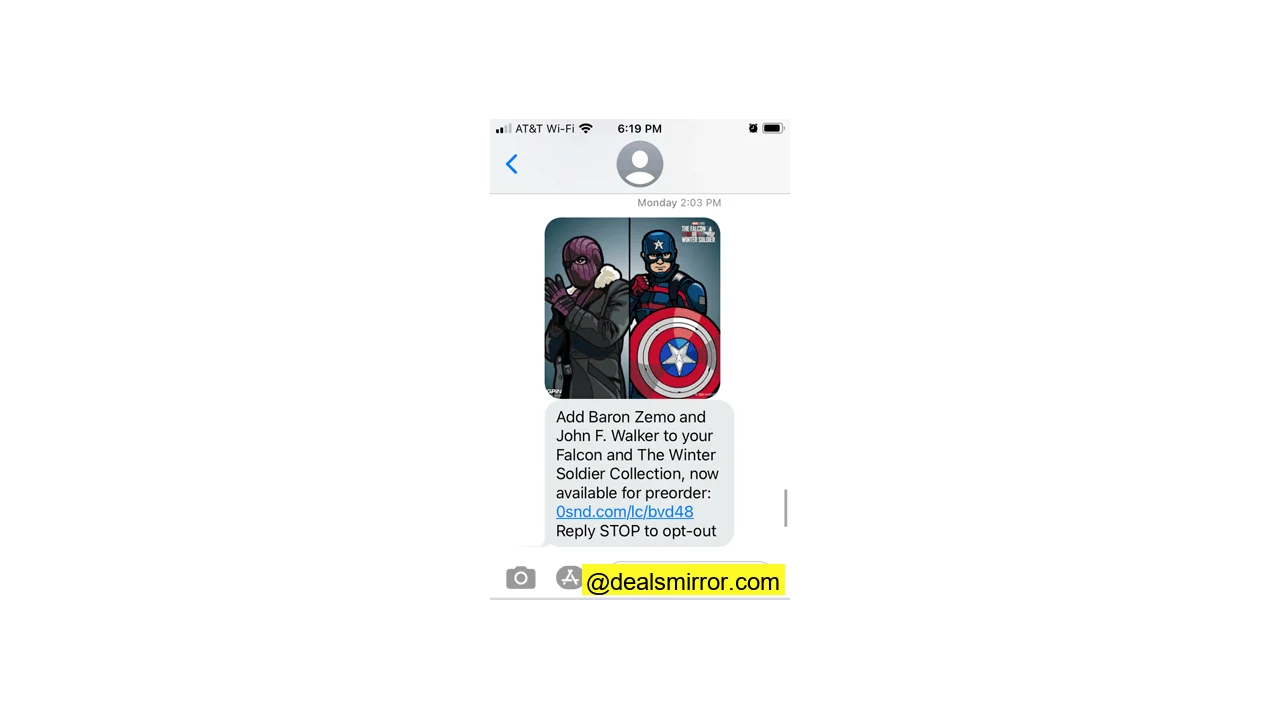
Think of “Multimedia Messaging Service” as SMS with a significant upgrade. With MMS, you can include captivating images, animated GIFs, and even short videos, expanding the character limit from 160 to 1,600. This allows you to showcase an eye-catching product, entertain customers, or educate them with dynamic visuals. MMS is a powerful tool for crafting compelling, emotion-driven messages.
It’s perfect for infusing vivid visuals into promotions for new collections, special sales, major announcements, or celebratory messages like birthdays and anniversaries. Here’s an excellent example from FiGPiN, using MMS to promote pre-orders for new collectible pins:
Two-Way SMS for Interactive Engagement
SMS can significantly improve customer service by becoming a two-way communication channel. Integrating SMS with a customer service tool enables customers to text back and forth directly with marketing or support teams. This personal touch fosters stronger relationships and faster resolutions.
You can also utilize bidirectional messaging to gather valuable feedback. For instance, send an SMS after a customer completes a purchase, inviting them to rate their satisfaction. This direct approach offers immediate insights and demonstrates your commitment to customer experience.
The Case for SMS Marketing: Key Statistics
SMS marketing is an indispensable component of the modern ecommerce merchant’s toolkit, and its growth is undeniable. Some brands saw an astounding 378% increase in SMS messages sent in 2020 compared to the previous year. But do these rising SMS campaigns actually translate into results? Absolutely. Here’s why:
- Immense Potential: The global reach of SMS is vast, with 65% of the world’s population actively sending and receiving SMS messages.
- Consumer Preference: Consumers actively desire text messages, with it being the most preferred channel for receiving brand updates, chosen by 48%.
- High Engagement: Approximately one-third of SMS recipients typically engage with calls to action.
- Strong Conversion: A significant 47% of engaged SMS recipients will proceed to make a purchase, demonstrating the channel’s direct impact on sales.
In 2020, SMS marketing prompted 2.65% of recipients to make a purchase—a doubling of the conversion rate from the year prior. As illustrated in the graphic below, conversion rates consistently increased with each quarter.
The notable fourth-quarter surge to 2.89% was largely driven by Black Friday and Cyber Monday. Marketers sent more SMS messages on these two crucial days than they did throughout the entire preceding month. The impact was clear: Black Friday SMS activities alone were responsible for 2.5% of all orders placed across all channels. Text marketing clearly has staying power, and savvy marketers recognize its power.
5 SMS Benefits for Your Business
While SMS promotions are excellent for driving sales and conversions, they offer a multitude of other strategic advantages:
- Unmatched Mobile Engagement: People are increasingly reliant on their smartphones. A study found that Americans’ daily screen time reached 4 hours in 2020. This means a substantial portion of their waking hours is spent with their phone nearby. An SMS message ensures your brand is literally in their pocket, ready for immediate interaction.
- Instant Attention Grabber: Few notifications demand immediate attention like a text message. This makes SMS perfectly suited for hyper-time-sensitive offers and urgent announcements. Even if a customer doesn’t immediately respond to the “ding,” they’re highly likely to mentally note it for a quick check as soon as possible.
- High Read Rates: Unlike emails, which can linger unopened for days, SMS messages trigger instant push notifications that remain prominent on the screen until read. This ensures a significantly higher likelihood that your message will be seen promptly, making it ideal for critical communications.
- Cost-Effective Marketing: While sending an SMS costs more than an email, it is considerably less expensive than digital advertising. Advertising costs on social media, for instance, grew 37% between 2020 and 2021. SMS offers a direct, high-impact channel without the escalating price tags of paid ads.
- Design-Free Simplicity: You don’t need a graphic designer or complex visual skills to create effective SMS campaigns. The focus is purely on clear, concise, and motivating copy. This simplifies the creation process, allowing you to launch campaigns quickly and efficiently.
Immediacy, mobile push notifications, and ease of use are all powerful ingredients for capturing your customers’ attention precisely when it matters most.
How to Get Started with SMS Marketing
If you’re convinced by the value of SMS and ready to implement it, there are several crucial steps to take before launching your first promotional text message.
1. Choose an SMS Platform
The first step is selecting the right SMS marketing engine. While mass texting solutions were once the norm, the market for SMS platform options has exploded. Many technology solutions specialize in sending text messages, and if you prefer to keep SMS communication separate from other marketing channels, most SMS software platforms integrate seamlessly with existing systems.
Key considerations when deciding on a platform include:
- Functionality: Does the service support MMS, two-way messaging, and shortcodes? Look for features like SMS list-building tools and marketing automations.
- Access to Data: A robust marketing platform should provide comprehensive metrics to analyze impact, identify trends, and integrate with your other marketing software for a holistic view.
- Cost: SMS sending costs vary based on the recipient’s country, with pricing typically structured around credits. Understand the pricing model to align with your budget.
6 of the Best SMS Marketing Services
Here’s a rundown of some top SMS marketing tools available today:
TextMagic
TextMagic is an SMS marketing solution designed for sending messages internationally to nearly any country. They offer clear pay-as-you-go pricing and a handy calculator to help you manage your budget. You can test out all the features with their free trial to determine if it’s the right text marketing platform for you.
Pricing: TextMagic pricing includes a free trial which is great for testing all features. Afterward, you can opt for a pay-as-you-go model or a monthly plan, where you can save 2.5% to 25% per text with monthly fees starting from $99.
SimpleTexting
SimpleTexting is an all-in-one text message marketing platform. They provide unlimited keywords across all their plans, along with standard SMS marketing features such as a free number, shortcodes, MMS, list-building capabilities, integrations, and analytics.
Pricing: SimpleTexting offers a 14-day free trial with 50 outgoing text messages. Their paid plans vary based on the number of text messages you can send. Zapier integration and API access are available for all plans, while custom integrations are included in plans starting at $145/month and above.
SlickText
SlickText is an SMS platform known for its intuitive interface. It offers one-on-one account setup and training, as well as a free mobile app to manage activities. SlickText serves a wide range of clients, from small businesses to large corporations, ensuring messages comply with regulations and carrier guidelines.
The platform boasts a comprehensive library of SMS automations and features, including two-way messaging, drip campaigns, loyalty rewards, text-to-win contests, text-to-vote polls, message scheduling, and auto-replies. Pricing follows a plan structure, and SlickText provides a 14-day free SMS trial.
Omnisend
Omnisend is unique on this list as an omnichannel marketing platform. This means you can send standalone promotional SMS campaigns and seamlessly integrate them into automated workflows alongside emails and push notifications.
Omnisend saves time with pre-built ecommerce workflows for cart abandonment, birthday messages, and order/shipping confirmation automations. The platform also offers powerful SMS list-building tools, advanced segmentation, personalization features, and 24/7 support. You can explore more about Omnisend’s features, pros, and cons here.
Pricing: Lower-tier plan holders can purchase SMS bundles, while some plans include free SMS credits.
EZ Texting
EZ Texting stands out as the most comprehensive SMS-focused platform on this list. Its suite of tools was specifically developed for SMS across various industries, including restaurants, government, hospitality, and real estate. EZ Texting solutions address four primary categories: sales and promotions, alerts and notifications, customer service, and lead generation.
Features include group messaging, mass texting, keywords, dedicated short codes, toll-free numbers, and link shorteners. Pricing is based on a plan structure and starts at $19/month with 4 cents per credit.
Twilio
Twilio is a cloud communications platform offering APIs that integrate all types of messaging. You might also know them for their email API service, Twilio SendGrid. With Twilio, you choose the channels you need and scale as your business grows. For example, you can start with SMS and then expand to MMS, two-way chat, and WhatsApp.
Popular features include alerts for estimated time of arrival, sales leads, appointment reminders, and reliable marketing message delivery. The platform operates on a pay-as-you-go pricing model.
2. Get a Dedicated SMS Marketing Number
Securing a dedicated sending number is essential for establishing your business’s SMS presence. Carriers require brands to invest in their own virtual numbers to prevent multiple businesses from sending messages from the same number, ensuring clarity and brand identity. Be aware of the following options:
- 10-digit Long Codes (10DLCs): These are emerging as a popular choice for commercial (A2P) messaging. While still largely being evaluated, they are suitable for lower-volume texting and non-time-sensitive messages.
- Dedicated Toll-Free Numbers: These are the standard go-to for brands prioritizing deliverability. They are approved for mass texting and can be activated almost instantly, offering a reliable and established option.
- Dedicated Short Codes: These are highly memorable, 5-6 digit numbers that offer the highest throughput. However, they are the priciest option and involve a lengthier approval process due to their premium nature.
3. Grow Your SMS and Email Marketing Lists
Gaining explicit permission from customers is an absolute requirement before sending any type of SMS marketing. Collect opt-ins through various channels, such as website pop-ups, during the checkout process, and through other online forms. For instance, SM Global Shop has a dedicated page solely for text alert sign-up:
Marketers must be fully aware of the U.S. Telephone Consumer Protection Act (TCPA) and similar local regulations. The TCPA strictly prohibits telemarketing to non-consenting customers, with violations incurring hefty fines of $500 for each unauthorized SMS sent. Therefore, securing clear SMS permission is paramount.
You can promote SMS list sign-ups at various touchpoints, including your website, during payment processing (if your POS system allows it), and within your email campaigns to maximize your audience.
5 SMS Marketing Examples to Inspire You
There are two primary approaches to integrating SMS into your marketing arsenal: a one-off campaign using SMS as the sole channel, or a drip campaign that combines a text message or two with other channel messaging for a cohesive experience.
#1 Stand-Alone SMS Campaigns for Urgent Offers
There are moments when ecommerce marketers need to be bold and capture immediate attention. These instances call for instantaneous reach, or a message so unique it deserves a megaphone that outperforms email’s typical open rates. Promotional announcements are ideal candidates for stand-alone SMS campaigns, especially for your most impactful offers:
- Flash sales
- Hot-selling items
- Last-chance reminders
- SMS-only offers or exclusive reward program benefits
The concept of FOMO (Fear Of Missing Out) is a powerful driver; research shows that FOMO compels 60% of people to make a purchase, often within 24 hours. Image-focused MMS is a fantastic mechanism for making these FOMO-driven messages pop and emphasizing their urgency. For example, Lurella Cosmetics used MMS to push an early announcement of two popular products to its most engaged customers, days before featuring it in an email sent to a broader audience:
#2 Welcome Series with SMS and Email
Greet new subscribers and engage them effectively with your brand through a staggered, multi-channel messaging approach. Here’s an example of how this might work:
- First Email: Product recommendations with an initial incentive.
- Second Email: Reviews based on tracked interests, expanded product recommendations, and a reminder of the incentive.
- Third Email: Sharing the brand’s story, more recommendations, and another incentive reminder.
- SMS Message: A timely reminder that the welcome offer is about to expire, creating urgency.
A simpler welcome series, comprising just one email and one strategic SMS, can be equally impactful in converting new leads.
#3 Cart Abandonment Series with Email and SMS
Cart abandonment remains a pervasive challenge for merchants, with 88% of online shopping carts abandoned in March 2020 alone. Re-engaging these prospects is critical for recovering lost sales. While email is traditionally used as the primary bait, integrating SMS significantly boosts effectiveness.
Equestrian apparel company Kerrits discovered that adding SMS to their abandoned purchase workflow helps immensely. For opted-in customers who leave their cart, an SMS is often the very first message sent:
Depending on the customer’s response, the workflow triggers up to two subsequent emails. Kerrits’ abandoned cart emails account for 29% of their automated email revenue, with a revenue per email (RPE) of $6.64. The SMS portion alone contributes a 15% conversion rate and an RPE of $2.87, proving its value.
#4 Celebrations SMS: Make Them Feel Special
While not every message should be sent via SMS, this channel is highly recommended for noteworthy occasions. Events like your customer’s birthday or a loyalty program membership anniversary are perfect fits. Make your customer feel truly special with an exclusive offer or discount sent directly to their phone, and continue the celebration with a follow-up email to reinforce the message.
#5 Order and Shipping Confirmation: Build Trust
Have you ever placed an online order and anxiously waited for the confirmation email to arrive? Allow your customers to opt-in for SMS confirmation. It’s incredibly direct, fast, and eliminates any uncertainty if email delays occur. An automatic text message also establishes your brand as trustworthy, showing you prioritize the customer’s peace of mind.
Leverage the SMS-email combination for shipping notifications as well. While you have the customer’s attention during these highly anticipated updates, it can be an opportune time to subtly advertise complementary products or share relevant brand content.
SMS Best Practices for Success
SMS marketing thrives when it builds and sustains fruitful relationships with your customers. To ensure the channel’s success, it’s best to start with a thoughtful strategy. Begin by asking yourself two critical questions, putting yourself in the customer’s shoes:
- In what way will your business use SMS marketing, and how frequently?
- Where do you draw the line between effective use of the channel and overuse that might alienate customers?
Beyond this overarching strategy, here are 5 essential SMS marketing tips and best practices:
- Segment Your Audience: Customers appreciate messages that feel uniquely crafted for them. Achieving this personalization depends on effective segmentation. Create lists based on shopping behaviors, marketing campaign engagement, demographics, and more. Devise appropriate messages for each segment, and if available, add their first name or other profile information to deepen personalization.
- Be Brief and Direct: Remember the character limits: 160 for SMS and 1,600 for MMS. Use this space wisely. Ask yourself, “What’s the core point of this message, and how can I convey it as concisely as possible?” Always include a clear link for more detailed information.
- Avoid Text Slang: Business-to-consumer SMS communication differs significantly from personal texting. Reserve abbreviations and slang for personal messages. Stick to proper, yet casual, English to maintain professionalism and clarity.
- Be Mindful of Sending Times: Text message notifications are typically enabled at all times on most phones. As a general guideline, send messages between 9 AM and 9 PM to respect your customers’ personal time and avoid unwanted disruptions.
- Include a Clear Call to Action (CTA): Every marketing message should prompt the customer to take a specific action. Include a straightforward call to action (CTA) with a corresponding, trackable link to guide their next step, whether it’s to shop, learn more, or redeem an offer.
SMS marketing isn’t a channel that stands alone. Many businesses achieve remarkable success through an omnichannel approach, reinforcing SMS messages with email and incorporating other channels into cross-channel campaigns. Email and other platforms allow you to communicate more details and offer more options than the inherent brevity of a short message service (it’s right there in the name!).
Adopt SMS as a vital tool in your marketing toolkit. Combine it with automated workflows and experiment with standalone SMS promotional campaigns. SMS has the undeniable capability to elevate any brand’s presence, strengthen customer relationships, and significantly boost sales.