Returning customers are the lifeblood of any business. After new clients are acquired, marketers want them to foster lasting loyalty. But how do you achieve this? Fortunately, there’s a strategic approach to loyalty marketing, applicable across all industries—be it eCommerce, B2B, or retail. These proven actions are unified under the term: Customer Loyalty Marketing, with its direct counterpart, an exceptional Customer Loyalty Program.
So, how do you create the best Customer Loyalty Marketing Program? One that resonates with all the key drivers of Customer Loyalty for your brand? Let’s dive in.
Customer Loyalty: Your New Battleground for Growth
You might be thinking: “What exactly is Customer Loyalty?” There are multiple ways to define it, but this explanation consistently holds true:
Customer loyalty is the likelihood that current customers will continue to engage with a brand. A customer brings repeat business due to the total value they receive from a company and the positive association they have formed with the brand.
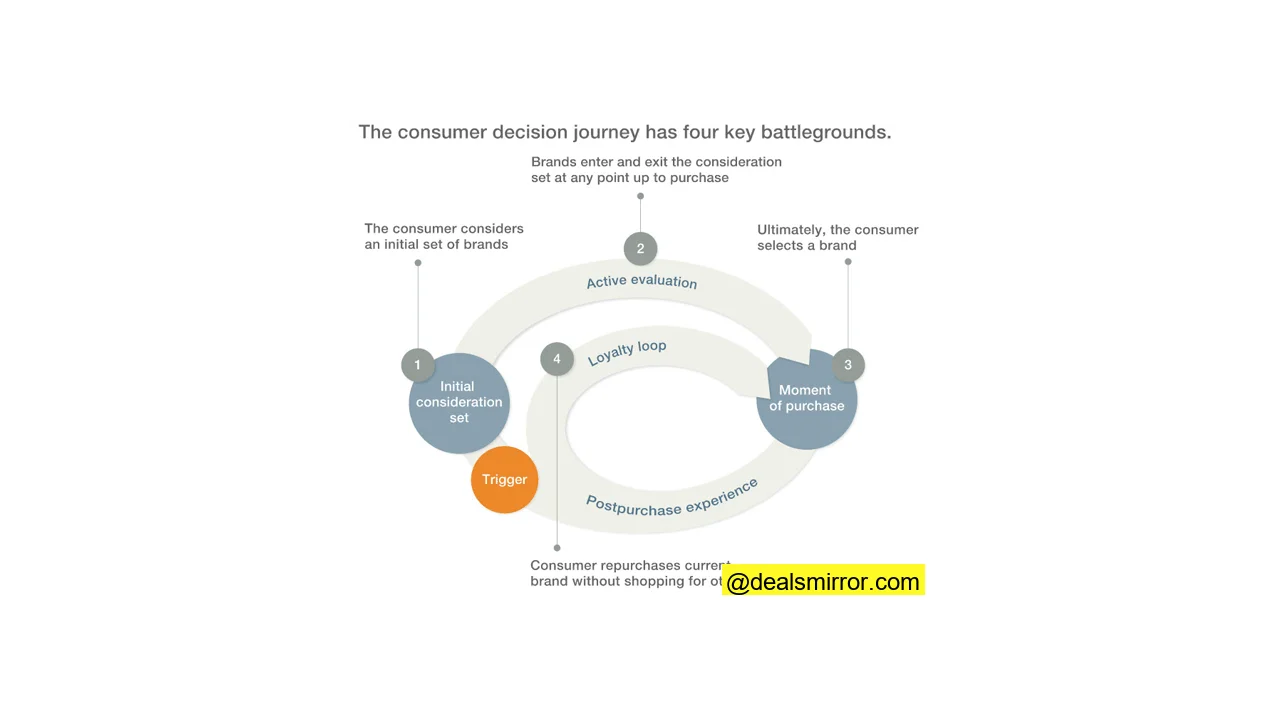
The loyalty loop model (above from McKinsey) defines the “4 battlegrounds of the customer decision journey,” placing repeat customers at the heart of the model. Did you know that 20% of your current customers can generate 80% of your company’s future revenue, according to Zinrelo?
Over time, customer loyalty develops into a formidable competitive advantage, encouraging customers to choose your brand over competitors. Moreover, loyal customers are incredibly profitable, which is why smart brands invest heavily in customer retention and loyalty initiatives.
6 Ways to Build Strong Customer Loyalty
Beyond offering a stellar product and excellent customer service, here are six powerful strategies to enhance customer loyalty:
- Reward returning customers through a loyalty program.
- Provide extra attention to top customers with VIP tiers.
- Improve customer experience (CX) across all channels.
- Personalize your messaging and leverage segmentation.
- Send event-triggered emails.
- Stimulate purchases with exclusive offers.
An example case comes from Remedy Drinks, whose automation begins with a seemingly simple welcome email and offer. This strategy extends to deeply engage customers with editorial on-brand content, how-to guides, and a complete suite of lifecycle campaigns. Their emails have since seen an impressive 15% increase in revenue.
Customer loyalty doesn’t necessarily mean a customer exclusively buys from you. People often have a favorite store but occasionally visit others. Consider your own supermarket habits, for instance. A loyalty program can significantly increase the likelihood that they will choose to stay and shop more with your brand.
What Makes a Great Customer Loyalty Program?
A customer loyalty program is a marketing initiative designed to stimulate loyalty and customer retention. It provides benefits and perks to frequent customers and ensures regular engagement. Brands invest marketing resources in loyalty programs because they foster a deeper, trust-fueled relationship with customers. To encourage long-term repeat business, loyalty programs offer various benefits, including discounts on merchandise, rewards, coupons, and exclusive or early access to highly anticipated products.
A customer is truly loyal if they act and feel loyal. Thus, a loyalty program can stimulate both short-term business through promotions and long-term positive attitudes and behaviors.
Customer Lifetime Value and RFM Analysis
Even a small improvement in retention rate or brand preference can yield significant long-term benefits. According to Harvard Business School, a 5% increase in customer retention can increase profits by 25% to 95%.
Therefore, we must discuss Customer Lifetime Value (CLV) and Recency, Frequency, and Monetary value (RFM) analysis. An RFM analysis allows you to pinpoint specific segments of your audience and launch targeted campaigns at critical points in their customer (loyalty) journey.
An example of RFM scoring customer segments used to develop specific actions based on those segments. More detailed tactics can be found in the ebook “Mastering RFM: Segmentation Tactics for Success” from dotdigital.
To gain these segmentations and insights, the data needs to be readily available.
Intelligent eCommerce and Business Intelligence (BI) dashboards can show you, for instance:
- Total Revenue
- Average Order Value (AOV)
- Customer Lifetime Value (CLV)
- Number of one-off customers versus repeat buyers
Here is an example of dashboarding that enables the development of specific client actions based on customer RFM segments.
The Impact of an Excellent Customer Loyalty Program
A well-executed customer loyalty program can profoundly impact your brand and bottom line:
- Members of top-performing loyalty programs are 77% more likely to choose your brand over the competition, according to Bond.
- Research indicates that customers with an emotional brand connection have a 306% higher lifetime value.
- Companies with strong loyalty marketing programs grow revenues 2.5 times faster than their competitors and generate 100-400% higher returns to shareholders, as reported by HBR.
One of the best examples of a successful customer loyalty program is the Sephora Beauty Insider rewards program. Sephora’s loyalty program is point-based; customers swipe their loyalty card with every purchase at the beauty store retail chain. Every dollar spent earns the member one Beauty Insider point.
The program boasts 17 million loyal members and drives up to 80% of Sephora’s annual sales. Yes, you read that right. Later, we’ll explore more loyalty program examples. But first, let’s understand how to create a successful loyalty program.
How to Create a Successful Customer Loyalty Program
Creating a loyalty program requires careful planning. We’ll start with a universal framework and then customize it based on your specific brand and audience. Here are the four essential steps to launch a robust business loyalty program.
1. Understand Your Loyalty Economics and Set Program Goals
Starting a marketing program merely because ‘everyone else is doing it’ is never a sound strategy. You need to clearly define the fundamental reason why a loyalty program exists for your brand.
Loyalty economics will dictate your “Why Loyalty”
The logic connecting customer loyalty to bottom-line results is straightforward: if customers love to shop with you, they will buy more products and services, and they’ll be less likely to switch to competitors.
The challenge lies in uncovering the true loyalty drivers. What precisely makes them enjoy shopping with you?
However, a Loyalty Program often has additional goals not directly tied to customer loyalty. The program can serve as a vehicle for other aspects of your business model, such as enriching data and generating customer insights. Therefore, your program goals must encompass these objectives as well. Once your ‘Why Loyalty Program’ is clear, many other pieces will fall into place.
Here are 5 typical goals of Loyalty Programs:
- Gather opt-in, contact details, and data to support direct marketing.
- Improve repurchase rates and Customer Lifetime Value.
- Decrease service, communication, and acquisition costs.
- Stimulate community and gather User-Generated Content (like testimonials, reviews).
- Improve customer advocacy and increase the number of brand promoters.
Ideally, the outcomes of your Loyalty Program should directly support your business. It’s always best to attach quantifiable metrics to these goals, making them measurable. This sometimes involves using surveys to track changes in customer attitude.
If your Loyalty Program serves multiple goals, rank them by importance and priority. This clarity will allow you to precisely measure the success of your program with correct metrics and at defined milestones.
2. Choose the Best Customer Loyalty Platform and Automation
A Customer Loyalty Platform is SaaS software that consolidates multiple loyalty marketing features. This platform is a critical component for implementing your loyalty program and greatly impacts daily operations. Understanding the differences between platforms is essential.
A quick checklist to evaluate a customer loyalty platform:
- Does the platform offer all the loyalty features I need?
- What is the cost, and does it fit within our budget?
- Is it a one-size-fits-all solution or highly customizable?
- Does the platform integrate seamlessly with my existing tech stack?
- Have they successfully served brands similar to ours or in our industry?
Loyalty Marketing software typically handles specific marketing functionalities. For example, a Customer Loyalty Management system might manage points, rewards, and subscriptions, then integrate with other CRM, email marketing, and eCommerce systems.
The 3 Best Customer Loyalty Platforms
When you’re serious about launching your loyalty program, selecting a Customer Loyalty Platform that bundles essential features and complements your current MarTech stack is crucial. Here are three of the best Customer Loyalty Platforms to consider:
LoyaltyLion
LoyaltyLion is a data-driven loyalty and engagement platform engineered for eCommerce growth.
- Utilize loyalty points and rewards to encourage repeat purchases and enhance engagement across all platforms.
- Trigger loyalty emails and points statements to deliver highly targeted communications.
- Increase customer acquisition and boost advocacy more cost-effectively through referrals.
You can integrate LoyaltyLion with your existing marketing tools such as ESPs, subscription platforms, review platforms, and helpdesk software. It works with all major e-commerce platforms, including Shopify, Shopify Plus, and BigCommerce. Pricing starts at $135 per month.
Antavo
Antavo is an enterprise-grade SaaS loyalty platform that empowers businesses to build comprehensive and scalable loyalty programs. With its holistic loyalty logic, Antavo helps foster brand love and influence customer behavior for omnichannel and e-commerce companies. They deliver exceptional shopping experiences with in-store capabilities like POS integration, mobile wallet solutions, in-store gamification, and kiosks.
- Supports earn & burn, tiered, gamified, coalition, and many other program types.
- Ideal for eCommerce, omnichannel, brands, retailers, and shopping malls.
- Offers coalition loyalty, mobile loyalty, and touchless in-store solutions.
- Features built-in gamification.
Antavo highlights the API-centric nature of its Loyalty Program software, making it a highly integrable piece for your tech stack. Pricing is available upon request.
Yotpo
Yotpo began as a feedback and reviews management system and has evolved into a full loyalty eCommerce platform. It allows you to use incentives and coupons to garner more reviews or other user-generated content. The loyalty module includes custom design, multiple rewards structures, and robust customer management.
- Begin collecting more customer reviews, feedback, and referrals.
- Offers a free plan for Shopify merchants.
- Provides tier-based loyalty rewards programs.
Note: Yotpo will discontinue email and SMS marketing services by December 2025, having already closed sign-ups to these services.
Integrate Marketing Automation and Plan Omnichannel Messages
The importance of marketing automation in a digital loyalty program cannot be overstated. Every brand operates across multiple channels, requiring loyalty data and systems to be seamlessly integrated into your Marketing Tech stack. Therefore, it’s crucial to consider where to centralize or make this data accessible.
Using customer insight tools makes it significantly easier to create loyalty segments, as discussed earlier with RFM. These segments or tags allow for content to be tailored and sent to your most loyal customers, as well as those who are inactive or at risk of churning, matching their phase in the customer journey. This can be delivered through targeted emails, SMS, push messaging, remarketing, and web applications.
By pulling data such as most recent purchases and loyalty points into your marketing automation software in real-time, you can create highly customized email campaigns. Here is a welcome automation in the dotdigital platform where customers are added to a ‘loyal customer’ segment based on their actions.
In this example, data flows directly from Magento, initiating a welcome message with a coupon. If the subscriber uses the coupon AND clicks on recommended items in a subsequent email, they are identified as enthusiastic and loyal customers, forming a valuable engagement segment. An SMS fallback is also included, demonstrating the 100% customizable nature of the system, allowing customers to move in and out of groups as appropriate.
Five loyalty program emails to certainly send:
- Welcome to the program: Let’s get started.
- Post-purchase emails.
- Emails promoting new perks and benefits.
- Campaigns to earn extra points.
- Reactivation emails for dormant members.
Consider using newsletter subscriptions as an entry point for your loyalty program. In other words, anyone receiving your newsletter could also have a (tier zero) subscription to the loyalty program, even if they aren’t active customers yet.
Matches Fashion, a winner of the Hitting the Mark benchmark report by dotdigital, introduces their loyalty program “The Curator” as part of their welcome series.
3. Set Your Rewards Structure to Be Both Functional and Exciting
A loyalty program’s success hinges on the structure of its rewards. Customers will only enroll if given a compelling reason, and they must consistently experience the value of the benefits and rewards to remain enthusiastic—this is the initial “Aha!” moment. Therefore, perfecting the benefit structure is instrumental for your program’s success.
A diverse mix of reward types will appeal to different customer segments and those in various buying phases. Here are the 5 primary types of loyalty rewards:
I. Monetary Rewards and Discounts: A monetary rewards structure is the most popular system for rewards. However, there’s still plenty of variety and fine-tuning to consider:
Customers can receive Monetary rewards in the form of:
- Upfront or one-time discounts for joining.
- Ongoing discounts or services (e.g., 5% off or free shipping).
- Members-only exclusive offers on products.
- Reward points redeemable for store credit or products.
- Cashback.
These rewards are popular because they directly stimulate repeat purchases and are relatively easy to set up and maintain.
II. Sweepstakes, Contests, and Giveaways:
A contest injects a sense of excitement into the entire loyalty system. People anticipate the possibility of winning, and the thrill makes the overall brand experience more memorable. Variable rewards are known to stimulate the brain, moving the interaction beyond being purely transactional.
III. Content and Personalized Touchpoints:
Customers often devalue loyalty programs that fail to cater to their attitudes, behaviors, and expectations. Incorporating personalized content and moments helps to deepen the brand relationship.
This impact is amplified if members can enjoy benefits outside their typical buying cycle. This encourages engagement without requiring constant purchases, fostering a stronger connection.
IV. Experience Rewards: Experiences are something many customers value even more than monetary incentives. An experience reward can generate genuine excitement and create memorable brand interactions.
For example:
- Organizing industry events (in B2B).
- Discounted trips to theme parks.
- Exclusive perks within the shopping experience.
- Meet-and-greets.
Designing a loyalty program tailored to your audience is an effective way to delight your customers, especially if you consistently reinforce the brand identity and acknowledge their preferences. For example, The North Face offers rewards that perfectly align with its brand and customers’ adventurous lifestyles. One aspect allows members to earn points by attending events or checking in at locations. However, their redemption options truly shine: customers can use points for unique adventures and travel destinations.
V. Exclusive Access and VIP Programs:
People in the highest tier of loyalists are often the most fervent apostles and advocates for your brand. This aligns perfectly with a tiered loyalty program, allowing for better segmentation of your customers (e.g., top clients versus other tiers). Adding benefits and services like free delivery or extended returns helps shield these high-tier customers from being lured away by competitors.
VIP programs demonstrate your appreciation through:
- Exclusive customer-only VIP events.
- Personal shoppers or enhanced shopping experiences.
- Additional premium services.
- Branded and limited editions of products.
Your Own Loyalty Reward Structure
Often, a mix of different reward types proves most effective. We typically observe that the reward structure is tailored to the specific brand, the expected type of loyalty, and the overall customer relationship. Nailing a reward structure that is both exciting and maintainable is crucial for the program’s long-term success.
How to Launch and Promote Your Loyalty Program
A successful launch ensures your Loyalty Program quickly gains critical mass. However, ongoing promotion is essential to sustain momentum. To keep costs down, you need a smart launch and promotion plan. Here are effective ways to promote your loyalty program:
I. In-Store & Point of Sale Promotion: This is an excellent starting point. Make the loyalty program an integral part of the buying process.
If you have a physical location, it’s perfect for promoting the loyalty program. Don’t just rely on a passive leaflet behind the counter; actively engage customers through conversations with your sales personnel. Consider using in-store (self or assisted service) kiosks for sign-ups, bringing the loyalty program to life, and reminding participants to swipe their cards or register purchases.
II. Your Newsletter and Triggered Emails:
Email is a fantastic channel for loyalty program communication. This begins with your personalized newsletter, periodic promotions, and triggered emails. Triggered loyalty emails are sent precisely at the right time, based on customer actions both within and outside the loyalty program.
By connecting a loyalty platform with marketing automation software, you can send personalized emails based on their loyalty status.
By pulling real-time data such as recent purchases and loyalty points into your marketing automation software, you can create highly customized email campaigns. Here is a welcome automation in the dotdigital platform where customers are added to a ‘loyal customer’ segment based on their actions.
In this example, data comes directly from Magento, initiating a welcome message with a coupon. If the subscriber uses the coupon AND clicks on the recommended items in the next email, they are identified as highly enthusiastic and loyal customers, forming a great engaging segment. While an SMS component runs as a fallback, this demonstrates the 100% customizable nature of the system, allowing customers to move in and out of groups as appropriate.
Five loyalty program emails to certainly send:
- Welcome to the program: Let’s get started.
- Post-purchase emails.
- Emails promoting new perks and benefits.
- Campaigns to earn extra points.
- Reactivation emails for dormant members.
Consider using the newsletter subscription as an entry point for your loyalty program. In other words, anyone receiving your newsletter could also have a (tier zero) subscription to the loyalty program, even if they aren’t active customers yet.
Matches Fashion, a winner of the Hitting the Mark benchmark report by dotdigital, introduces their loyalty program “The Curator” as part of their welcome series.
III. Website Visibility and Pop-ups:
Your website audience is already interested in your products or services, so increasing the program’s visibility on your site is a no-brainer.
- Use dedicated pages to streamline new registrations.
- Strategically place calls to action (CTAs) on your site for maximum visibility.
- Run (exit-intent) pop-ups directing visitors to the loyalty section of your website.
- Add a sticky bar to the top of your site with promotional information.
IV. Current Customer Products and Touchpoints:
Promote the program within or on your product itself, making it an integrated part of the Customer Experience (CX). Simultaneously, this promotes your Loyalty Program. With platforms like Magento, Shopify, or others, this can be managed within the “My Account” login section.
Some industries, such as travel or credit cards, feature automatic loyalty program opt-ins. The moment you create a login, you’re enrolled in the program, and monthly overviews of accumulated points are typically provided.
V. Remarketing, Social Media, and Word-of-Mouth:
Your website visitors are already part of the conversation. Promoting the loyalty program through remarketing ads incentivizes them to engage with you further. This extends beyond Google Ads to platforms like Facebook audiences, LinkedIn, and more.
Segment your audience by loyalty and customer value from high to low. Start promoting your loyalty program to your most valuable customers and then expand. Additionally, consider targeting Look-alike Audiences that share characteristics with your current advocates and loyalists.
Another “social” way to promote is by harnessing the power of Word-of-Mouth. Include a tell-a-friend functionality in your program, incentivizing existing loyalty members with additional points or benefits for sharing on social media and encouraging their friends to sign up.
6 Customer Loyalty Program Examples to Inspire You
By now, you understand what a loyalty program is, how to select a loyalty platform, and the various ways to structure your rewards. Let’s explore inspiring loyalty program examples and the diverse types you can implement and learn from today.
1. Beer Hawk (Earn and Burn Loyalty Program)
An earn & burn loyalty program operates on the principle that the more you spend, the more points you accumulate. Every time a customer makes a purchase (or performs other engagement actions), they earn points, often based on their spending amount. For example, earn 5 points for each €5 spent, and for every 100 points, receive a €10 discount to use on your next purchase.
Alternative points-based loyalty programs focus on frequency and offer delayed rewards, similar to a stamp system. For instance, get a free coffee on your 10th visit. One of the most common examples of a points system is how credit card rewards programs operate.
BeerHawk Beer Tokens
What’s better than free beer? Two free beers! BeerHawk is the UK’s premier online retailer of specialty beers and ales. They aimed to connect mobile, online, and physical bars while driving personalization with loyalty-enhanced emails. The Beer Tokens loyalty program successfully achieves all three objectives.
- Earn loyalty tokens for purchases, friend referrals, reviews, and returning kegs.
- Every Beer Token converts into a £0.05 discount on the next order, applicable both in-bar and online.
- Features POS integration that updates a customer’s point balance in real-time.
What we like about this program:
We appreciate the omnichannel data integration and seamless feel of the loyalty program. All customer loyalty data—including loyalty status, purchases, and available Beer Tokens—is pushed to Beer Hawk’s marketing system account in real-time. This ensures that the company’s email campaigns always feature up-to-date and personalized loyalty information.
2. FNV Member Benefits (Partner and Membership Program)
Memberships represent the ultimate form of loyalty. Organizations and special interest groups consistently attract new members primarily through their core services, which can sometimes be intangible until a specific issue or need arises. A loyalty program with substantial benefits can serve as added value and validation for the membership itself.
In a partner model, the organization leverages co-promotion and discounts from other companies (partners) to offer exclusive benefits to its members or clients. In return, partners can offer their products and gain exposure through communication to loyalty members.
FNV Member Benefits
The FNV is the Dutch workers’ union that represents multiple industries, providing advocacy, lobbying, and individual support concerning work and income. Their member benefits program has been running for over 10 years and offers discounts in several ways:
- Year-long discounts, quarterly, and monthly promotions keep the program fresh and engaging.
- Specific segments, such as Starters or Seniors, receive tailored discounts and communications.
- Omnichannel program communication includes their website, email newsletters, and a print membership magazine.
What we specifically like is the enormous engagement and utilization of the program. More than half of all members have actively used the benefits, and 71% perceive added brand value based on the “extra cherry on the cake” membership program.
3. The Chivery (Gamified Loyalty Program)
Gamification is the application of game-design elements and game principles in non-game contexts. As such, gamification can provide an extra layer of engagement to your loyalty program. Common game mechanics found in loyalty programs include tiers/levels, challenges/missions, badges, progress bars, surprise-and-delight elements, auctions, and virtual rewards.
CHIVE Rewards
The Chivery sells pop culture merchandise related to the hugely popular blog TheCHIVE. The Chivery boasts a very active customer base on social media, offers over 1,000 products, and serves 1.2 million customers.
To boost customer loyalty and engagement, they reward purchases and much more. They gamify the entire experience, using the LoyaltyLion Shopify app for rapid integration, then customizing every element of the loyalty program through editable CSS.
- Earn points for account creation, website visits, and purchases.
- Compete on the ‘Chivers’ point Leaderboard for a bit of healthy competition.
- Receive even more points for referrals and activities like photo uploads, scoring, and social sharing.
What we like about this program:
TheCHIVE uses the loyalty program to gamify their entire blog. Fans can transition from theCHIVE to the Shopify store via the loyalty program and redeem points there alongside purchases, effectively converting fans into paying customers. This makes it such an interesting case study. The program operates across multiple sites and domains, leveraging the LoyaltyLion Platform and Shopify Multipass.
4. Amazon Prime (Perks – Join and Enjoy)
Customer loyalty programs don’t always have to be entirely free. Adopting a walled garden approach, you can charge a monthly or annual membership fee. Customers can opt for the paid program and become ‘premium’ or ‘plus’ members of the brand.
The Amazon Prime program is an excellent example of a paid perks program. The challenge with this approach is twofold: you must make the offer irresistible, and you need to market it effectively as a premium product.
5. Toms (Charity and Purpose)
Communicating to your clients that a portion of revenue is donated to charities or good causes can bring people joy and foster loyalty. However, such initiatives need to be closely aligned with your brand’s core identity. For brands like Toms or Patagonia, this approach makes perfect sense, as it deeply resonates with their brand ethos. While not always the most direct customer loyalty stimulant, it builds powerful emotional connections.
6. Lego Ideas (Community and Membership Program)
Humans are social animals, and we inherently seek a sense of belonging. Making access exclusive can elevate the perceived value and engagement within your community.
Lego Ideas is another exemplary program you can draw inspiration from for building a vibrant, engaged community.
Start Building Customer Loyalty Today!
Customer loyalty is intrinsically linked to your business’s bottom line, retention rates, and overall growth potential. So, get started today by determining which customer loyalty tactics you’ll embrace, and use the inspiring examples we’ve reviewed above to spark your creativity.
There is truly no better way to grow than by retaining your best customers. Customer loyalty programs offer the most structured and effective pathway to initiate and scale these efforts. Begin with a strategic, business-oriented goal, select the right platform, craft a reward structure that suits your brand, draw inspiration from successful brands, and get the ball rolling.
“Satisfaction is a rating. Loyalty is a brand.” – Shep Hyken.