
The term “sales funnel” is a cornerstone of modern business strategy, frequently surfacing in discussions about sales, revenue optimization, and sustainable growth. But what exactly does this powerful concept entail?
At its core, a sales funnel represents the structured journey potential customers undertake when interacting with your brand, ultimately guiding them towards a purchase. Each distinct stage within the funnel influences customer behavior, providing invaluable insights into their buying journey. A profound understanding of this path to purchase empowers businesses to optimize their strategies and significantly improve conversion rates.
In this comprehensive guide, we’ll delve deep into the mechanics of sales funnels, exploring how they operate and providing a step-by-step blueprint for constructing your own. By the end, you’ll possess the knowledge to cultivate a continuous stream of new opportunities for your company, one strategic step at a time.
What Exactly Is a Sales Funnel? The Fundamental Principles
The term “sales funnel” precisely illustrates the journey prospective consumers embark on as they engage with your business. It’s a rare occurrence for individuals to discover a product and immediately proceed to purchase. Instead, customers navigate through various sales funnel stages, from initial research to careful consideration, before making a commitment.
Alarmingly, a report by Salesforce reveals that approximately 68% of companies have not clearly defined their sales funnel. This oversight significantly hinders their ability to effectively guide customers through their buying journey.
While the implementation of a sales funnel doesn’t guarantee every single conversion, it dramatically enhances your probability of securing a sale. By understanding the specific actions and motivations that propel a customer from initial “awareness” of your company to being “ready to buy,” you can strategically nurture each opportunity.
While closely aligned with the concept of a customer buying journey, a sales funnel offers a distinct perspective:
- It operates from the company’s viewpoint.
- It exclusively highlights stages directly related to sales.
- It focuses solely on the customer-company relationship, excluding external influences.
This illustrates the close relationship between a sales funnel and a sales pipeline.
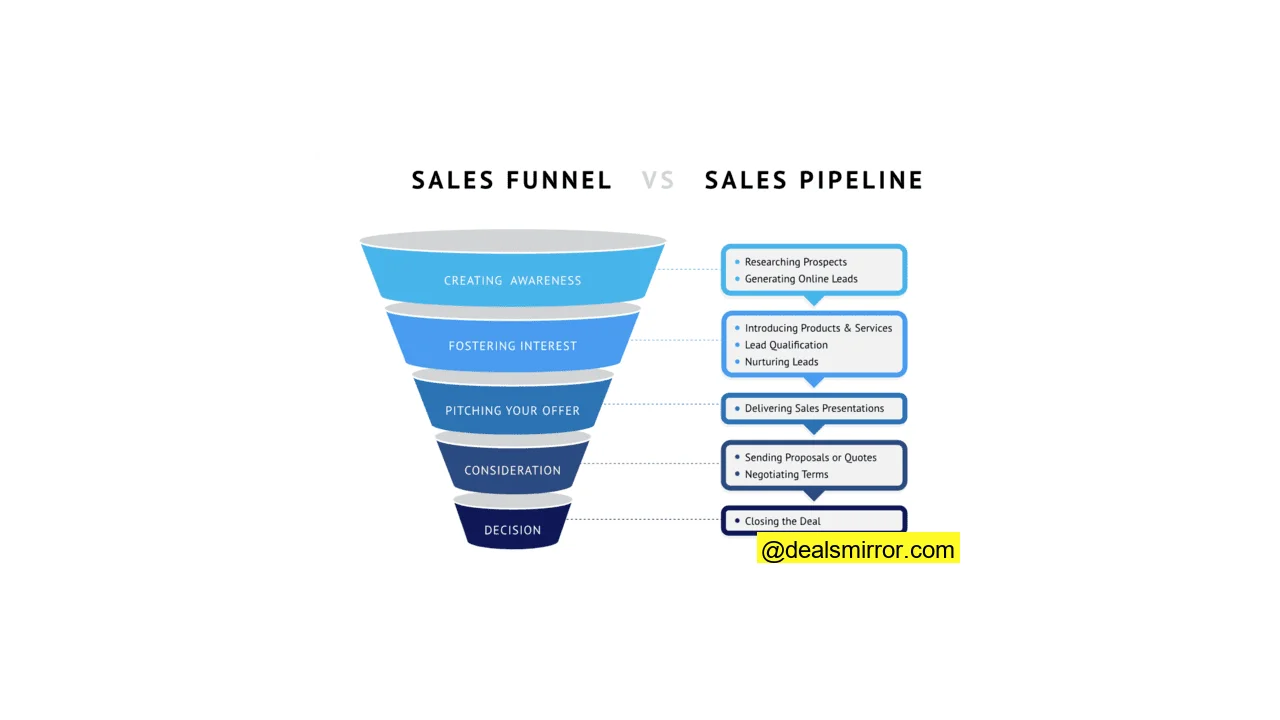
Many businesses struggle to visualize and map the intricate customer journey and accurately order their entire sales funnel. It’s easy to overlook micro-interactions and crucial steps that profoundly impact the path to purchase. This is why so many tools are available today to help companies collect and visualize data. The more comprehensive information you gather, the more effectively you can address potential gaps and optimize the process.
Sales funnel example:
Every sales funnel is unique, tailored to a company’s specific offerings and target audience. Let’s consider a practical example by imagining how a customer might subscribe to Netflix. Your sales funnel steps could involve:
- Discovery: A potential customer searches Google for “streaming service” and lands on your SEO-optimized website page.
- Exploration: The customer visits your homepage, sees an advertisement for a free trial, and clicks through to your pricing page.
- Comparison: The customer actively compares your various pricing packages and simultaneously researches similar streaming services.
- Decision: The prospect commits by signing up for your free trial, providing their email address, which you can then use for follow-up communications.
- Retention: As their free trial nears its end, you send an email offering a discount on their first month to encourage continued subscription.
Why Is a Sales Funnel Crucial for Your Business Growth?
Sales funnels are indispensable strategic tools designed to cultivate meaningful relationships with your customers. A well-constructed funnel provides profound insights into what potential customers are doing, thinking, and feeling at every stage of their purchasing journey.
Understanding your customer’s journey allows for smarter investments in the right marketing channels and activities. Furthermore, it empowers you to craft highly relevant and persuasive messaging that effectively guides consumers through the funnel.
With a meticulously planned sales funnel, you can achieve several significant objectives:
- Improve Your Marketing Efforts: Sales funnels bring precision to your marketing. Instead of relying on guesswork, you can invest in campaigns specifically designed to resonate with your target audience. Your deep knowledge of the customer journey enables you to create targeted content and ads for each stage of the sales pipeline.
- Increase Sales: An effective sales funnel serves as a powerful learning mechanism. It reveals what truly motivates your target audience and helps you identify actions that lead to customer retention versus churn. The more you refine your approach to move customers through the funnel, the more successful your conversions become.
- Boost Revenue: Beyond just sales, funnels are instrumental in identifying and converting highly qualified leads. By strategically adding steps, you can even increase the average spend per customer. Implementing upsells or cross-sells for specific buyer personas, for example, can enhance future purchases. The bottom of the funnel should always include strategies for retaining customers, transforming them into long-term brand advocates.
- Create Accurate Forecasts: Forecasting is a vital aspect of sales management. By meticulously tracking customer movement through your sales funnel, you can more accurately predict business outcomes. You’ll gain clarity on the typical time it takes for new customers to reach the decision stage, allowing for better allocation of time and resources for each conversion.
- Reduce Expenses: Cost per acquisition (CPA) is a critical metric for any sales team. Ineffective tactics at the top and middle of the funnel can lead to significant prospect loss and wasted budget. A well-optimized sales funnel helps pinpoint which actions genuinely drive conversions, ensuring your marketing budget is spent on strategies with the highest return on investment (ROI).
Some forward-thinking companies even develop distinct sales funnels for each potential customer segment they aim to reach, further refining their strategies for engaging new audiences.
Decoding the Sales Funnel Stages: The AIDA Framework
To construct a truly effective sales funnel, a clear understanding of its constituent stages is paramount. From the initial point of Awareness at the top of the funnel to the crucial Retention phase at the bottom, each step plays a vital role. While there are various models to define these stages, we’ll focus on the classic “AIDA” framework: Attention, Interest, Desire, and Action.
As famously and succinctly put by Alec Baldwin in the classic film, AIDA encapsulates the “Always Be Closing” mantra:
1. Attention
Attention, often referred to as “Awareness,” marks the inaugural stage at the very top of your sales funnel. At this point, customers are just beginning to become conscious of your product or service. This “Awareness” can also extend to prospects recognizing a problem they need to solve, for which your offering might be the solution. Users discover your company through a multitude of channels.
To truly become aware, you must first capture their attention. Some prospects might learn about you through social media campaigns or targeted advertising. Others may be introduced to your business via word-of-mouth referrals. The trajectory of how and why individuals move from mere “Attention” further down the sales funnel largely depends on your strategic engagement efforts.
During the Attention stage, your company’s primary objective should be to engage your audience. The goal is to capture the attention of new leads with compelling content. Informative blog posts that explain how your products solve specific pain points can encourage further investigation. Engaging social media posts can prompt individuals to follow your brand online, initiating their journey through the funnel.
2. Interest
The Interest stage is where the engagement deepens. After your new leads have become aware of your company, they must decide to actively investigate further. During the “Interest” stage, potential customers make a conscious effort to learn more about what you offer.
This phase is typically where your content marketing strategies prove most valuable. Every well-crafted blog post, article, or resource provides potential customers with an opportunity to gain deeper insights into your brand. You can design dedicated landing page offers to highlight the specific benefits and unique selling propositions of your products. Alternatively, creating informative videos and podcasts can effectively answer common customer questions, building further interest.
The more readily available and accessible information your audience can find online, the more interested they will become. The overarching goal of your sales and marketing efforts at this stage is to cultivate sufficient interest to propel individuals towards making a purchasing decision.
3. Desire
If your efforts in informing and engaging leads are successful, they will naturally progress to the Desire stage of the sales process. In this crucial phase, your customer actively gathers the final details and assurances they need to confidently make a purchasing choice. They might reach out to your sales team to schedule a demonstration, arrange an appointment, or discuss customized options.
During the Desire stage, a successful sales funnel typically provides abundant information on value, features, and transparent pricing. Highly effective sales pages and exclusive landing page deals are particularly valuable here. Consultations and direct calls from sales representatives can also be instrumental in addressing any lingering buyer objections or concerns.
To excel during the Desire stage of the sales funnel, ask yourself what you would need to feel confident buying something new. Beyond an understanding of the price, what other factors would you seek? Would you need to compare different pricing packages, read detailed specifications, or ask specific questions about subscriptions or warranties? Identify and remove any potential friction points in the customer’s journey that could prevent them from taking action.
4. Action
The Action stage represents the bottom of the sales funnel and is singularly focused on conversion. If your sales cycle and marketing strategy have been meticulously executed, your leads will be primed and ready to take the final step. During the Action stage, your primary objective is to persuade your clients to complete the purchase.
Qualified prospects might finalize a purchase, subscribe to a service, or sign up for a webinar. Crucially, if your sales funnel is designed effectively, your interaction with the customer won’t simply cease at the point of action. After your customer converts, you should shift your focus towards cultivating a new, ongoing relationship with them.
Following the “Action” stage, prioritize strategies to earn long-term loyalty from your new customers. You might initiate them into a new sales funnel, introducing them to complementary products or premium services. Additionally, you can actively encourage converted customers to become advocates for your brand. Referrals and positive reviews are exceptionally powerful for attracting new leads and reinforcing brand credibility.
Exploring 7 Essential Sales Pipeline Stages
It’s important to remember that there are multiple effective ways to define and structure sales funnel stages. For instance, in a B2B context where manual sales efforts are common, and you leverage paid media, marketing automation, and sales software, a typical sales pipeline might comprise these distinct stages:
- Prospecting: Identifying potential customers who fit your ideal buyer profile.
- Lead Qualification: Assessing whether identified prospects have the need, budget, authority, and timeline to become a viable opportunity.
- Demo or Meeting: Presenting your product or service and engaging in a direct discussion of their specific needs.
- Proposal: Submitting a tailored offer outlining the solution, pricing, and terms.
- Negotiation and Commitment: Discussing and refining the proposal, leading to mutual agreement and a verbal or written commitment.
- Opportunity Won: The successful close of the deal, with the customer officially coming onboard.
- Post-Purchase: Engaging after the sale to ensure satisfaction, encourage retention, and explore further opportunities.
Related: 11 best sales books to master the art of selling
An Effective Sales Funnel Example in Action
Let’s illustrate the sales funnel concept with another practical example. Imagine you operate an e-commerce company specializing in retro bikes, targeting an audience aged 24 to 55 who are highly engaged on platforms like Instagram.
You launch a captivating Instagram ad campaign designed to drive traffic to a dedicated landing page. On this page, you entice prospects to sign up for your email list by offering a valuable eBook about bike maintenance or choosing the perfect retro ride. This action successfully converts visitors into qualified leads for your business.
Over the subsequent weeks, you send a series of educational emails to your new subscribers, providing valuable insights into bike care, different models, and the joys of cycling. Towards the end of this nurturing sequence, you present an exclusive 20% discount code for new customers.
Once customers make a purchase, you segment them into a different email list. Here, the process begins anew, but with a focus on upselling complementary bike accessories such as racks, helmets, and custom seats. Simultaneously, you can launch a referral program, incentivizing existing customers with a discount on their next bike service appointment for referring new clients.
Throughout this comprehensive sales funnel, you’ve strategically utilized the following AIDA steps:
- Awareness: Your compelling Instagram ads successfully directed potential customers to your landing page.
- Interest: Your landing page offered a valuable eBook, capturing attention and obtaining email addresses for further engagement.
- Desire: You provided prospects with informative and persuasive content, cultivating their desire to make a purchasing decision.
- Action: Your exclusive coupon code served as an irresistible incentive, prompting leads to complete their purchase.
Building Your Sales Funnel: A Step-by-Step Guide
By now, the critical importance of sales funnels for driving conversions should be abundantly clear. While crafting exceptional sales funnels often requires dedication and strategic effort, the complexity can vary based on your business model. Converting customers for high-value products, for instance, typically demands a more robust funnel.
If you’re starting from scratch, there’s no need to feel overwhelmed. Here are actionable steps to build an effective sales funnel quickly and efficiently:
Step 1: Deeply Understand Your Audience
The foundational first step in building any sales funnel is to thoroughly understand your target audience. You need to know precisely where to find your ideal customers to initiate the sales process. Remember, effective marketing isn’t about reaching everyone; it’s about connecting with the right people. Your sales efforts will yield far greater success with a clearly defined, targeted audience.
Begin by developing a detailed buyer persona. This comprehensive document outlines your ideal customer profile. The more granular and detailed your persona, the better. Consider demographic factors like age range, location, gender, hobbies, skills, education, and income. Crucially, also focus on their motivations, goals, pain points (frustrations), and how your product or service can specifically address their needs.
Once you have a vivid vision of your intended audience, the next question is where you will physically find them. You might effectively engage a younger demographic on platforms like TikTok or Instagram. Conversely, your B2B clients might be best reached through LinkedIn or organic search results on Google. Knowing your audience’s online habits and preferred platforms is key to capturing their attention at the awareness stage.
Step 2: Capture Customer Attention Strategically
The subsequent step in your sales funnel involves actively earning customer attention. Since you now know where your prospective customers congregate, it’s time to connect with them directly. Build brand awareness by creating valuable blog posts optimized for search engines (SEO). This organic content can draw people into the “awareness stage” of your campaign.
Leverage social media with both organic posts and paid campaigns to reach your target customer segments. Consider running targeted ads through Pay-Per-Click (PPC) platforms. Showcasing your website prominently on Google search results can be a highly effective method for generating initial leads.
As with every stage of the funnel, diligently track your results. Whether you’re utilizing paid advertisements or organic content strategies, pay close attention to how each campaign influences your customer’s journey. This data-driven approach will help you maximize the impact of your marketing budget.
Step 3: Design an Irresistible Landing Page
Your landing page is an absolutely critical component of your sales funnel. It serves as a dedicated showcase, clearly presenting what you have to offer to prospective customers. More importantly, well-designed landing pages keep your ideal customers focused on a single objective. When a client clicks on one of your ads or a link, your landing page’s primary role is to convince them to take a specific action.
Use a focused landing page design and avoid linking to other pages on your website or including extensive navigation menus. Instead, directly introduce your compelling offer on the page. This offer is designed to get people onto your email list, enabling you to nurture them through the subsequent stages of the funnel.
The most effective landing pages typically feature:
- A clear and concise articulation of the value being offered.
- A strong, singular Call to Action (CTA) that explicitly tells customers what step to take next.
- A compelling lead magnet (such as a free download, eBook, or exclusive template) designed to convert visitors into leads.
Step 4: Create Engaging Email Sequences
Once you’ve successfully gathered the contact details of your new prospects, the nurturing process begins. Thoughtfully crafted email sequences allow you to connect with subscribers and build lasting relationships. The most effective campaigns deliver content regularly, consistently providing value rather than merely promotional messages.
Resist the urge to immediately bombard your customers with sales offers. Instead, prioritize educating them about your service, your industry, or your company first. Share links to your most popular and informative content, or showcase success stories and testimonials from existing clients. Find creative ways to demonstrate your authority and build credibility within your niche.
By referring back to your buyer personas, ask yourself what specific information or incentives would truly convince someone in your audience to purchase your product. What valuable resources can you provide to encourage a sale? Only at the conclusion of this nurturing campaign should you present an incredible, time-sensitive offer to encourage your leads to take decisive action.
Step 5: Maintain Consistent Engagement
As previously emphasized, a truly great sales funnel should not culminate with just a single transaction. It is essential to keep your customers continuously connected to your brand. With this in mind, segment every converted customer into a new email list specifically designed for post-purchase engagement. From here, you can continue to reach out to your clients with tailored communications.
E-commerce brands, for instance, might offer exclusive coupon codes to encourage repeat sales and foster customer loyalty. You could also invite consumers to join your loyalty program. Actively solicit reviews and testimonials; positive social proof from existing customers can significantly influence new prospects and reinforce brand trust.
Crucially, repeat customers are consistently more profitable and less costly to convert than acquiring new prospects, highlighting the immense value of post-purchase engagement and retention strategies.
Continual Optimization: Refining Your Sales Funnel
As you might expect, the work of sales is never truly “done.” Similarly, sales funnels are not a “set-and-forget” mechanism. You must continuously update and optimize each of your sales tactics. The deeper you understand your audience and marketplace, the more refined and effective your funnels will become.
Your prospective customers often have a wealth of other options available. If you want to keep potential customers engaged and returning for more, consistent effort in optimization is key. Utilize tools like Google Analytics and other robust analytics tools to meticulously track conversion metrics. Pay close attention to how each individual part of your sales funnel contributes to successful conversions.
It’s also invaluable to actively listen to your audience. Your customers can provide direct feedback on their buying process and highlight any sales funnel stages where they encountered difficulties. Don’t limit your optimization efforts solely to the bottom of the funnel; consider every single stage.
During the awareness stage, empower your marketing team to create dozens of distinct versions of your Instagram ads. Conduct A/B tests for each campaign to discern which creative elements and messaging resonate most effectively with your potential customer. Leverage the sophisticated targeting features offered by social media platforms to precisely home in on the right prospects.
Furthermore, apply A/B testing methodologies to different stages within your sales funnel. For instance, if you’re developing content for your email sequences, split test various copy variations and images to determine which combinations yield the best results. Many email marketing platforms come equipped with integrated tools to facilitate such experimentation.
Optimize your sales funnel through the following strategic steps:
- Start at the Top: Begin by A/B testing the content you deploy to generate initial awareness. Examine which advertisements most effectively appeal to your potential customer. Create diverse content variations tailored for different audience segments.
- Scrutinize Your Landing Pages: Ensure this critical funnel stage is perfected. In the middle of the funnel, your landing page represents one of the most vital customer touchpoints. Test everything: from headline and body copy to imagery and Call-to-Action (CTA) buttons. Even a seemingly minor change, such as altering the offer on your landing page, can significantly increase your lead generation.
- Experiment with Email Sequences: Send different variations of your email content to distinct segments of your audience. A/B test your end-of-sequence offers and meticulously track the resulting conversion rates. Most email marketing platforms include advanced tools to assist with this kind of data-driven experimentation.
- Track Retention Metrics: Consistently monitor how often customers make repeat purchases. Is it easy to convince customers to continue engaging with your brand? How many individuals enroll in your referral program or loyalty campaign? These metrics provide crucial insights into long-term customer value.
Conclusion: The Power of a Strategic Sales Funnel
In essence, a sales funnel represents the evolving relationship between your business and its customers. It meticulously maps the various stages, both large and small, that companies undertake to connect with and convert a prospect. Every single stage within the sales funnel plays a pivotal role in ultimately securing a conversion.
An intelligently designed funnel does more than just attract new customers; the right strategy will also significantly improve lead conversion rates and cultivate enduring customer loyalty. Take the necessary time and effort to build sales funnels that are perfectly tailored to your unique brand and objectives.
Be prepared to continuously update and enhance your strategy over time. As you gain deeper insights into your marketplace and audience, your sales funnel will inevitably evolve and improve, leading to sustained business growth.